How to Make Brand Pitch Emails Not Sound AI Generated: Anti-AI Humanization Tactics for Content Creators
Learn how to make brand pitch emails not sound AI generated with simple humanization tactics like PS notes, capitalization, and casual language that gets replies.
Details
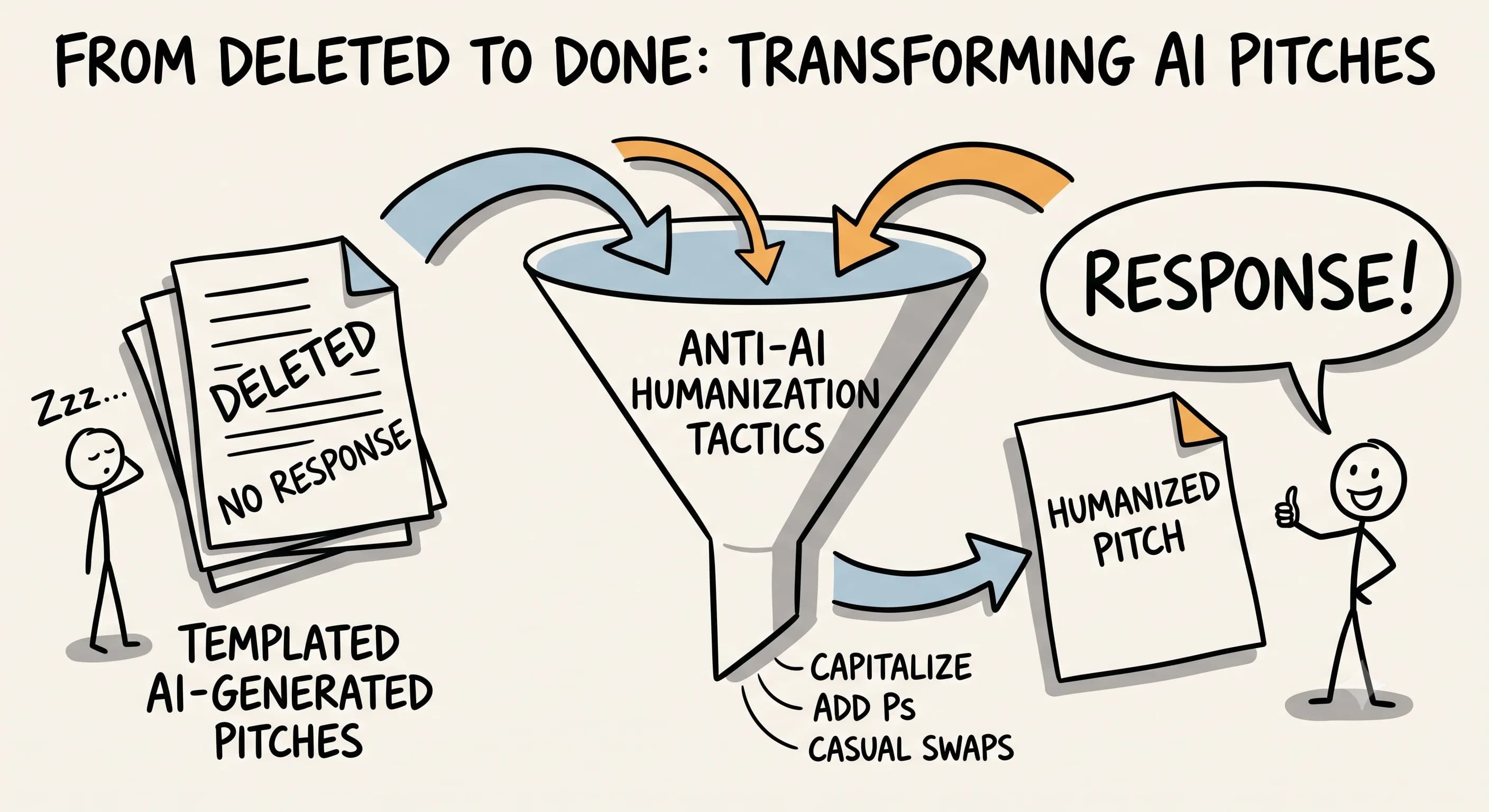
How to Make Brand Pitch Emails Not Sound AI Generated: Anti-AI Humanization Tactics for Content Creators
Brand managers and PR teams can spot an AI-generated pitch from the first sentence. They receive hundreds of pitches every week, and the ones that get deleted all share the same telltale signs: flawless grammar, zero personality, and absolutely no soul.
If you want to stand out as a content creator in an era where everyone has access to the same AI tool, you need to understand what makes AI-generated emails feel robotic and then deliberately do the opposite. These small but powerful formatting choices are the difference between a brand partnership and digital silence.
Why AI Writes Emails That Feel Robotic and Impersonal
 When you use AI to write a pitch email, the output is technically impressive. The sentences are structured correctly, the tone is professional, and the flow is logical. But that is exactly the problem. Real human communication is not technically perfect. It is enthusiastic, casual, and occasionally grammatically questionable in the best possible way.
Generative AI tools like ChatGPT follow patterns trained on enormous datasets of formal writing. The result is ai-generated content that is grammatically correct but personality-free. It never randomly capitalizes a word for emphasis. It never adds a PS at the bottom. It does not abbreviate words or drop a casual lol into the mix. These are not bugs in the system. They are features of human expression that the model has learned to avoid because they technically break the rules.
Brand managers who receive hundreds of pitches have become unconscious experts at detecting this pattern. Even if they cannot articulate exactly what feels off, they feel the difference between a real person reaching out and a templated ai-generated pitch with a name swapped in at the top.
The fix is not to stop using AI entirely. It is to know which signals to add back in after the AI tool has done its job.
How to Make Something Sound Not AI-Generated: The Capitalization Trick
One of the most effective tactics to make ai content feel human is strategic mid-sentence capitalization. This is something ChatGPT will never do on its own because it violates standard grammar rules. But humans do it all the time in text messages, emails to friends, and casual professional communication.
When you are genuinely excited about a brand, you would say it out loud with emphasis. You would say you LOVE their new product line or that you are SO excited about this collaboration. Capitalizing those words in your pitch email mirrors how you would actually speak. It signals genuine enthusiasm rather than manufactured professionalism.
The prompt here is simple: read your draft out loud and notice which words you naturally stress with your voice. Then capitalize exactly those words. This keeps your brand voice intact while adding a distinctly human fingerprint to your message.
You've probably done this in a text to a friend without even thinking about it. That same instinct is exactly what your pitch email needs.
The PS Note That Makes AI-Generated Pitches Instantly Forgettable by Comparison
 When you ask ChatGPT to draft a pitch email, it almost never adds a PS at the bottom. Never. This is one of the clearest tells that separates ai-generated pitches from real ones.
A PS note has been a staple of personal correspondence for decades because it feels like an afterthought, a genuine human moment where the writer remembered one more thing they wanted to say. Adding a PS to your pitch email instantly communicates that a real person wrote this. Use it to add something personal, like a comment about a product you genuinely use, a callback to a previous interaction with the brand, or a casual aside that did not fit naturally in the main body.
For example: PS - I literally used your SPF30 on my hiking trip last weekend and it survived a full river crossing. That is going in my next video regardless!
That sentence cannot be faked by an AI tool. It is specific, it is personal, and it sounds like a person. No prompt produces that kind of detail because no prompt knows what you actually did last weekend.
The PS note is free, takes thirty seconds, and immediately separates your pitch from every templated ai-generated email in the inbox.
How to Make Emails Not Sound Like AI: Abbreviations, Emojis, and Casual Language
 Another way to humanize your pitch is to swap formal vocabulary for the words you actually use in conversation. Instead of writing "my favorite product," write "my fave product." Instead of "I am very enthusiastic about this opportunity," write "I am genuinely pumped about this collaboration."
These substitutions serve two purposes. First, they make your brand voice feel consistent and authentic. Second, they signal to the reader that a real person composed this message because the AI output defaults to formal, complete language every single time.
Emojis are another tool that ai-generated content almost never includes naturally. Dropping one or two relevant emojis into your pitch where they feel organic does not make you look unprofessional. It makes you look like a creator who knows how to communicate in the current digital landscape. Use them where you would genuinely use them in a text message to a colleague you like.
The lol question comes up often, and yes, a well-placed lol can humanize a pitch dramatically. Use it sparingly and only where it genuinely fits your tone and style. If you would not say it in person, do not force it into the email.
A quick checklist of human swaps to make before you hit send:
- Favorite becomes fave
- Very excited becomes SO excited (or just capitalize EXCITED)
- I would love to becomes I would LOVE to
- Add one emoji where it fits naturally
- Drop a lol only if you would actually say it out loud
Keep Your Voice: Remove These AI Tells Before You Hit Send
Beyond adding human elements, you also need to remove the signals that make AI-generated content obvious. The biggest one to watch for is the em dash, that longer dash that ChatGPT loves to use between clauses. It has become one of the most recognized markers of AI writing. If your draft is full of them, replace them with commas, rewrite the sentence, or just cut the clause entirely.
Other robotic patterns to eliminate include overly formal transition phrases like "Furthermore" or "In conclusion," lists that feel like bullet-pointed deliverables rather than conversation, and any sentence that sounds like it could have come from a corporate press release.
You've seen these phrases before in emails that felt cold the moment you opened them. Your pitch cannot afford that first impression.
To keep your voice consistent, ask yourself this question before sending: would you actually want to receive this email? Does it sound like you talking? If the answer to either question is no, keep editing.
The goal is not a perfect email. The goal is an email that sounds like a real, enthusiastic person sent it.
Use AI to Write Smarter Emails, Not to Replace Your Voice
Using AI to draft your pitch is completely fine. The mistake is treating the first output as the finished product. Think of your AI tool as a rough draft generator, not a ghostwriter. It gives you structure and a starting point. You bring the specificity, the enthusiasm, and the human fingerprint.
The workflow that works: let ChatGPT build the skeleton of your pitch, then go back through and apply every tactic in this article. Capitalize the emotional words. Add your PS. Swap formal language for casual alternatives. Remove the em dashes. Add an emoji where it fits. Read the whole thing out loud one more time.
That edited version is what you send. Not the raw AI output.
This approach also keeps your subject line from sounding robotic. Your subject line is the first thing a brand manager sees, and AI-generated subject lines tend to be overly formal and generic. Write your subject line yourself, in your own voice, after you have already humanized the body of the email. It will feel more aligned and more personal.
Sound Less Robotic on Every Platform: Applying This to Your Creator Business
These tactics apply across every platform where you are pitching brands, whether you are a YouTube creator, an Instagram influencer, a LinkedIn content creator, or a podcaster building sponsorship relationships. The medium changes but the principle stays the same: brands want to work with people, not with AI-generated templates that happen to have a name at the top.
On LinkedIn specifically, where the content often skews more professional, you can still apply these humanization tactics in a calibrated way. A strategic capitalization or a PS note works just as powerfully in a professional context. The goal is not to be unprofessional. It is to sound less like a bot and more like the creative professional you actually are.
For monetization, this is not a small detail. Your pitch email is often the first real impression a brand has of working with you. If it feels like you used the same AI tool they have access to, there is no differentiation. But if it reads like a genuine, enthusiastic human being reached out? That is a competitive edge that no prompt can replicate.
Your pitch is your audition. Make it sound like you showed up for it.
Tone and Style Adjustments That Generative AI Cannot Fake
There is a layer to this that goes beyond individual tactics. Your tone and style, the specific combination of words you choose, the rhythm of your sentences, the things you find genuinely funny, the brands you actually care about, that is something generative ai cannot replicate from a generic prompt.
The more specific and personal your pitch is, the harder it is for a brand manager to ignore it. Specificity is the single biggest differentiator between a pitch that lands and one that gets archived. Not just "I love your brand" but which product you use, how you use it, what you would actually say about it on camera, and why your audience specifically would connect with it.
AI can give you a framework. Only you can fill it with the details that make a brand think: this creator actually gets us.
When your tone and style feel consistent from the subject line through to the PS note, you have built something that reads like a person, not a prompt output. That consistency is what makes a brand manager forward your email to the partnerships team instead of deleting it.
Your Action Plan to Humanize Every Pitch You Send
Start with your current pitch template today. Read it out loud, capitalize the words you would emphasize in speech, and add a genuine PS note at the bottom. Swap one or two formal words for casual alternatives, remove every em dash, and add an emoji or two where they fit naturally. Then read it one more time and ask: does this sound like you?
When the answer is yes, you have built something no AI tool can copy, because it actually is you.
Your five-step checklist before every pitch goes out:
- Read the draft out loud and capitalize stressed words
- Add a PS note with something specific and personal
- Swap at least two formal words for casual alternatives
- Remove every em dash from the draft
- Add one or two emojis where they fit your natural tone and style
That is it. Five steps, ten minutes, and your pitch instantly reads like a real person sent it. In a crowded inbox full of AI-generated content, that is the edge that gets you the reply.
Read more about Monetization & Business Models for Content Creators
📚 Complete Guides
- Content Creator Monetization: Proven Revenue Streams
- Content Creator Income Streams: 7 Ways to Build Financial Stability
⚡ Tactics & Strategies
- 30 Daily Outbound Pitches for UGC Deal Generation
- Affiliate Code Negotiation Using Membership Audience Influence
- Age Bracket as Superpower Strategy for Older UGC Creators
- B2B Merchandise Bulk Sales to Industry Professionals- Packaging Products as Client Gifts for Lawyers and Service Providers
- Becoming Your Own Sponsor by Plugging Your Offer Within Episodes
📄 Related Articles
- UGC Usage Rights Explained: What to Charge and How to License
- Usage Rights Pricing: How Content Creators Can Maximize Revenue from Brand Partnerships
- Welcome Email: Examples and a Sequence That Converts
- Email Sender Reputation: How to Protect It
- Why Content Creators Must Demand Monetary Payment for Influencer Partnerships
- Email List Building: Why It's Your Most Valuable Asset
- How Long Should a Newsletter Be? Longer Than You Think
- What Is a Good Engagement Rate? Benchmarks by Platform
🧮 Calculators

Alex Kirillov
Details
One link. Every channel, rate, and piece of work brands need to evaluate you. Built for how creators actually get hired.
Claim your profile
Live creator, content, and marketing roles from real companies, with the pay, market, and context the raw job page never gives you.
Browse jobs