How to Reframe a Niche Around a Deeper Human Desire to Grow Your Audience on YouTube
Learn how to reframe a niche around a deeper human desire to grow your audience on YouTube with this step-by-step strategy used by real creators to scale fast.
Details
What if the reason your YouTube channel isn't growing has nothing to do with your content quality, your thumbnails, or your upload schedule? What if the real problem is that you're thinking too small about what your channel actually does for people?
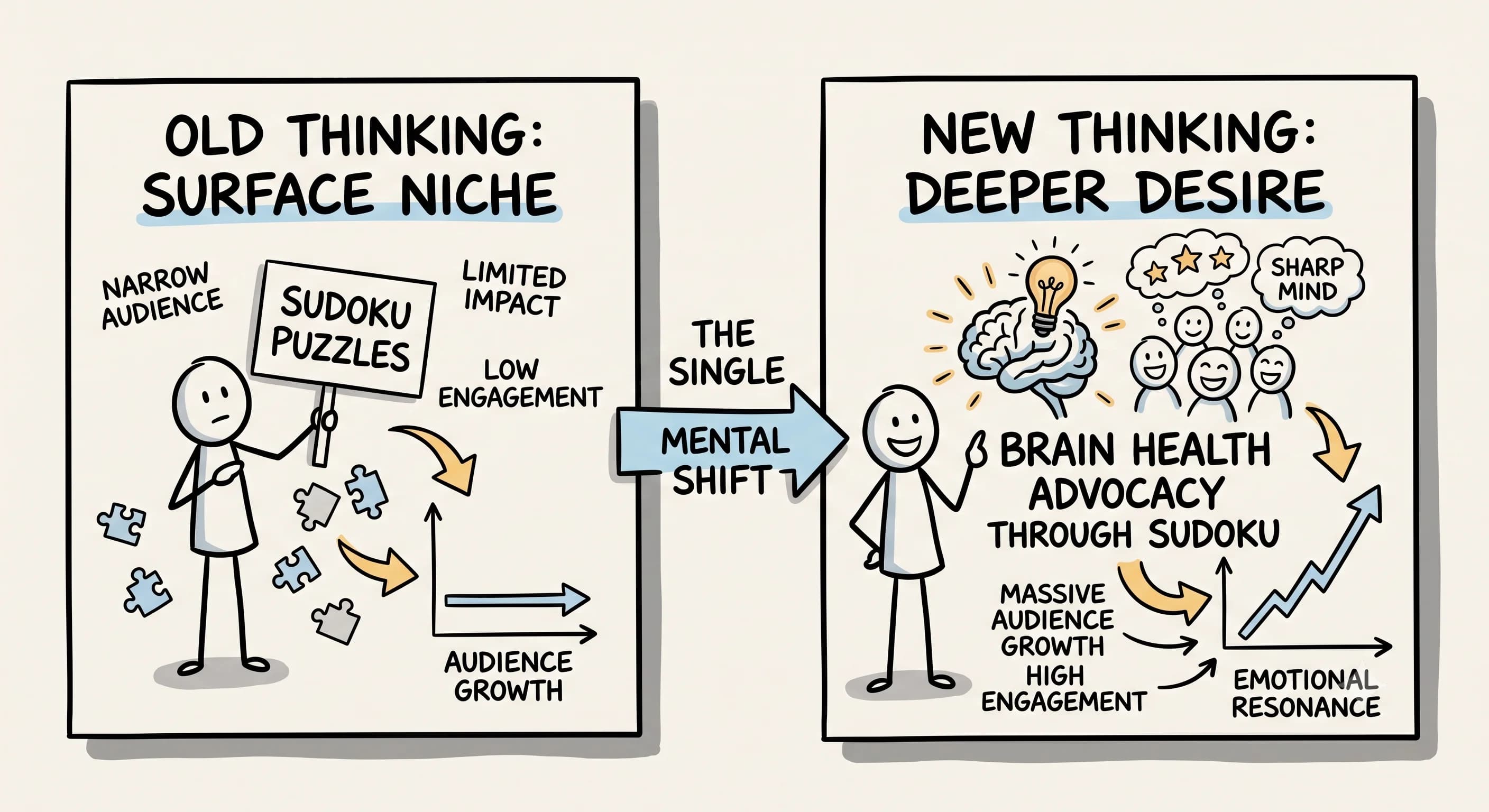
One creator named Jason runs a Sudoku channel. On the surface, that sounds like a tough sell in a crowded creator economy. But Jason did something brilliant. He stopped thinking of himself as a puzzle creator and started thinking of himself as a brain health advocate who uses Sudoku as the vehicle. That single mental shift opened up a dramatically larger audience, a more emotionally resonant message, and a clear path to premium product development. This post breaks down exactly how you can apply the same strategy to your own channel, no matter what your topic is.
Why There Is No Such Thing as a Small Niche Audience
 The phrase "small niche" is one of the most limiting beliefs a content creator can carry. When Jason looked at his channel, he could have concluded that Sudoku enthusiasts are simply a small slice of the internet and left it at that. Instead, he asked a more powerful question: what deeper human desire does Sudoku actually serve?
The answer was profound. Sudoku isn't really about filling in numbered grids. It's about keeping your mind sharp as you age, staving off cognitive decline, and doing something proactive about a fear that tens of millions of people carry every single day. The fear of dementia, memory loss, and mental deterioration is one of the most universal anxieties among adults over 50. By connecting his niche to that deeper human concern, Jason didn't just find a larger target audience. He found an emotionally urgent one.
Marketing researchers point out that effective messaging should identify the desires that already exist in your prospect and connect them to your offer. That's the key insight here. You're not inventing a new desire. You're recognizing a desire that's already there and showing your audience that your content speaks directly to it.
This is what changes everything for YouTube creators: your niche is not your topic. Your niche is the deeper transformation your topic provides.
How to Define Your Niche Around a Universal Human Desire
Step One: Define Your Niche at the Surface Level
Start by stating exactly what your channel covers at face value. Cooking. Fitness. Personal finance. Watercolor painting. Sudoku puzzles. Don't judge it yet. Just name it clearly. This is your surface-level topic, and it's only the beginning of the exercise.
Step Two: Find My Niche's Deeper Purpose
 Now ask yourself the harder question: what human fear, desire, or aspiration does this surface topic actually serve?
Cooking channels are rarely just about recipes. They're often about nourishing your family, saving money, impressing people you care about, or reclaiming a sense of control over your health. Fitness channels are rarely just about exercise. They're about confidence, longevity, and feeling capable in your own body.
There's a useful framework worth knowing here. Research into how successful niches are structured suggests that creators who anchor their offer in one of three top-tier human needs, which are relationships, wealth, or health, and then map into a specific sub-niche, tend to build far more emotionally compelling channels. Jason's reframe is a textbook example of this. Sudoku becomes the specific sub-niche. Brain health in aging is the top-tier human need. That's the structure that makes the message land.
To find your niche's deeper purpose, try completing this sentence: "My viewers watch my content because, deep down, they want to _____." The blank should reveal something emotionally significant, something tied to identity, fear, love, status, or survival.
The Strategic Insight of Reframing Your Position
Once you identify that deeper desire, your entire position as a creator changes. Your channel description, your video intros, your thumbnails, and your calls to action all have the opportunity to speak to something far more motivating than a hobby.
Jason's repositioning is a clear example of this strategy in action. His message shifted from "learn how to solve Sudoku puzzles" to "keep your mind sharp as you age with just five minutes of Sudoku a day." That second message speaks directly to aging adults who are actively looking for ways to stay mentally fit. It answers the question that the audience is already searching for. It positions Jason not as a puzzle guy, but as someone who holds the key to something they genuinely care about.
Brand strategists describe this kind of move as category reframing, where the winner changes what the audience thinks the category is really about in their mind. Most creators never do this deliberately. They stay at the surface level and wonder why their message doesn't land. When you make the connection explicit between your content and a universal human desire, you naturally stand out because you're the only one in your space speaking to what your audience actually cares about most.
When your message connects to a universal human desire, you don't have to fight for attention. The desire does the work for you.
Effective Marketing Strategies for Growing My Audience on YouTube
Build Your Content Funnel Around the Deeper Transformation
 One of the most effective marketing strategies for growing your audience on YouTube is to align every piece of content with the larger transformation you offer. For Jason, this means videos aren't just puzzle walkthroughs. They're episodes in a larger story about brain health, aging gracefully, and giving yourself the best chance at a sharp mind. Each video reinforces the mission, not just the method.
For your channel, this means your titles, thumbnails, and video descriptions should reflect the deeper desire, not just the surface topic. Instead of "Easy Watercolor Tutorial for Beginners," consider "How Painting for 10 Minutes a Day Reduces Stress and Anxiety." Instead of "My Weekly Meal Prep Routine," try "How I Stopped Feeling Overwhelmed at Dinner Time Forever."
You've probably noticed that channels with a clear mission feel different to watch. There's a sense of continuity and purpose that keeps people coming back. That's not accidental. It's the result of a creator who knows the deeper transformation they're providing and builds everything around it.
Use Demographics Data to Sharpen Your Target Audience
YouTube Analytics gives you powerful demographics insight into who is already watching your content. Once you've reframed your position around a deeper human desire, check whether your current demographics align with the audience who would most benefit from that larger message.
Jason's brain health reframe naturally attracts adults in their 50s, 60s, and 70s. That's a demographics group with both high emotional investment and real purchasing power. If your demographics don't yet match your ideal audience, use your new messaging to gradually attract the right viewers through more targeted titles and descriptions. It won't happen overnight, but the shift in your language will compound over time as the algorithm learns who your content is actually for.
Scaling Your Channel and Monetization with a Bigger Mission
 Here's where the real business insight lives. A channel about Sudoku puzzles can sell a puzzle book. A channel about keeping your mind sharp as you age can sell a comprehensive brain health course, a monthly membership with daily cognitive challenges, and a community for people who want to age with intention and clarity. The product ceiling is dramatically higher when your mission is larger.
Research into creator monetization confirms this directly: people rarely buy a hobby. They buy what the hobby does for them emotionally or socially. That's the underlying mechanism that makes the Sudoku-to-brain-health reframe increase willingness to pay and justify premium products. When you're selling a meaningful outcome rather than a method, the perceived value goes up significantly.
And there's more to it than just pricing. Reframing a micro-niche around a universal desire also increases perceived audience size, emotional urgency, and the legitimacy of premium products such as courses or memberships. You're not changing what you create. You're changing what it means to your audience. That distinction is worth a lot.
Even platforms like LinkedIn see this strategy in action when professionals reframe their expertise around career transformation rather than just skills training. The same principle applies across platforms because the underlying human psychology doesn't change based on where someone consumes content.
Defining Your Niche Audience: The Common Mistake to Avoid
The mistake most creators make is assuming that finding a niche means narrowing until the audience is tiny. The real goal is the opposite. You want to find the smallest specific topic that connects to the largest possible human desire.
Think of it as a funnel running in reverse. Sudoku is the narrow entry point. Brain health for aging adults is the vast territory that entry point opens into. Your surface topic is just the door. The deeper desire is the room.
When you define your niche audience this way, you're not limiting yourself. You're finding the most precise path to the most motivated people. That's the difference between a channel that flatlines and a channel that grows with compounding momentum.
Your Next Step Starts Today
Take 15 minutes right now. Write down your surface-level niche and then answer the deeper purpose question honestly. From there, rewrite your YouTube channel description to reflect that larger mission. Update your next video's intro to open with the deeper transformation, not just the tutorial.
Watch how your audience responds when they feel truly seen, not just taught. The niche was never small. You just needed a bigger message to match it.
Read more about Audience Building & Growth for Content Creators
📚 Complete Guides
- How to Build an Audience as a Content Creator
- How to Find Your Target Audience (Start With One Person)
⚡ Tactics & Strategies
- 30 Daily Outbound Pitches for UGC Deal Generation
- 50% Retention Rate Optimization for YouTube Algorithm Success
- Age Bracket as Superpower Strategy for Older UGC Creators
- Audience Consistency Strategy to Avoid Algorithm Penalties
- Audience Psychology Over Algorithm Optimization, Focusing on Human Pain Points and Goals Instead of Platform Tactics
📄 Related Articles
- How to Get More Instagram Story Views: The STD Strategy
- Questions to Ask Your Audience on Social Media (That Get Replies)
- Cold Email Outreach: A 90-Day System for Creators
- Instagram Lead Generation: The Comment-to-Get Strategy
- Influencer Gifting: The Creative Method That Wins Collabs
- Voice of the Customer: A Creator's Guide to Magnetic Messaging
- How to Ask Someone to Be on Your Podcast (And Actually Get a Yes)
- Brand Differentiation: The Three Circles Framework

Alex Kirillov
Details
One link. Every channel, rate, and piece of work brands need to evaluate you. Built for how creators actually get hired.
Claim your profile
Live creator, content, and marketing roles from real companies, with the pay, market, and context the raw job page never gives you.
Browse jobs