Selling Your Own Products Instead of Sponsorships: The Smartest Creator Monetization Strategy
Selling your own products instead of sponsorships keeps more money in your pocket. Learn how to use your niche audience data to create and sell products as a creator.
Details
Why Selling Your Own Products Instead of Sponsorships Is the Smartest Creator Monetization Strategy
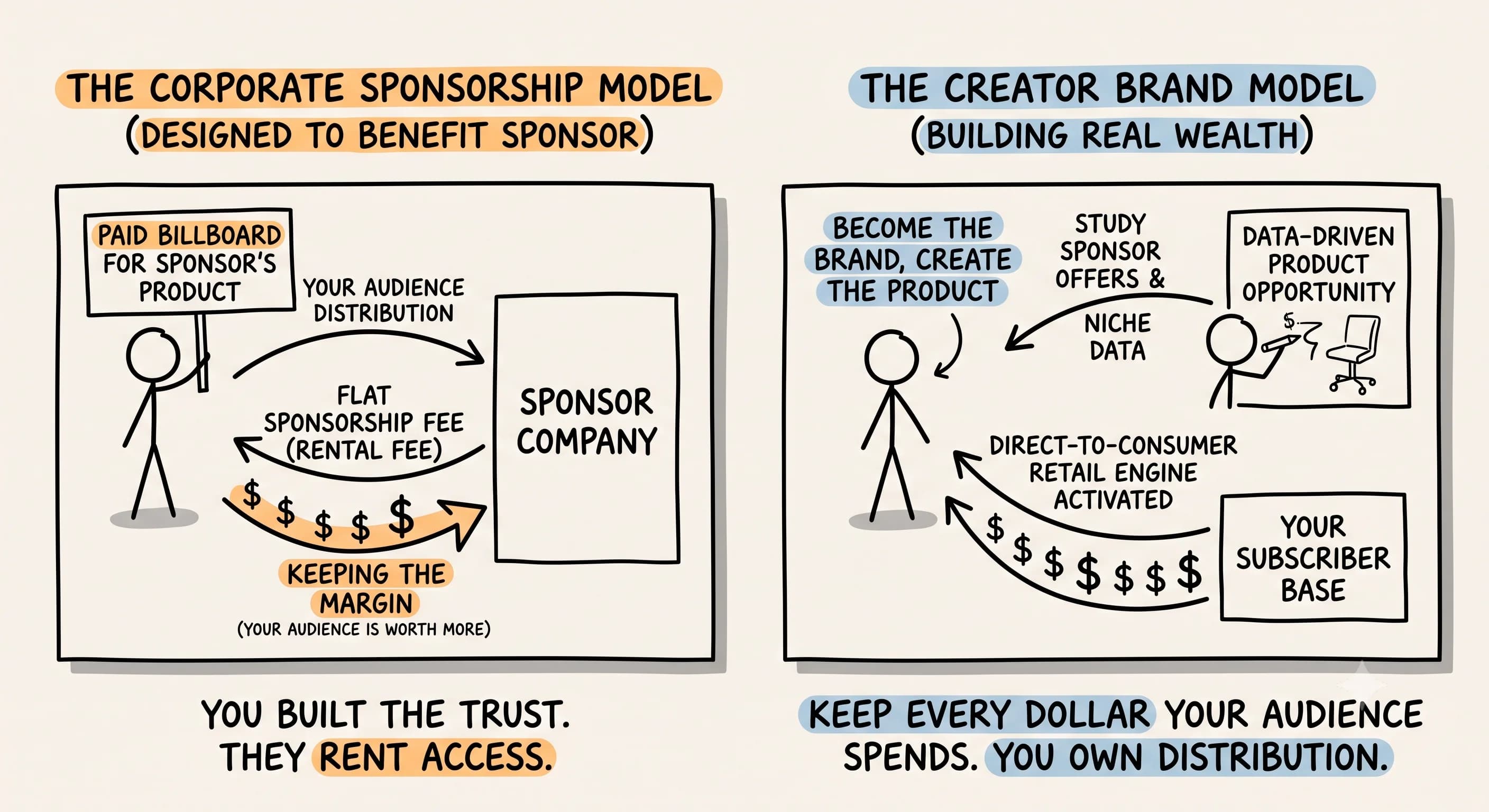
Every time a brand slides into your inbox with a sponsorship deal, something quietly happens: they're essentially telling you that your audience is worth more than what they're offering to pay you. Think about that for a second. A company is willing to hand you a check because they're confident they can sell your audience something at a profit. The margin they keep after paying you? That's money that could have been yours.
This is the insight that changes everything for creators who are serious about building real wealth on YouTube and beyond. Instead of acting as a paid billboard for someone else's product, you can become the brand, create the product, and keep every dollar your audience spends.
The Corporate Sponsorship Model Is Designed to Benefit the Sponsor
A company approaches you with an offer because your niche audience represents a reliable buying group. They've done the math. They know that if they pay you a flat sponsorship fee, they can generate enough sales to cover that cost and then some. The sponsor isn't being generous. They're making a calculated investment in your distribution power.
You've probably experienced this and brushed it off as a compliment. But here's what it actually means: you already own that distribution. You built the subscriber base. You earned the trust. You created the content that made your audience loyal. The sponsor is simply renting access to something you permanently own. So why settle for the rental fee when you could collect the full income?
Understanding this flips the entire creator monetization conversation on its head. Your platform isn't just a content channel. It's a direct-to-consumer retail engine waiting to be activated.
How to Create Your Own Product Using Your Niche Audience Data
 The most powerful starting point is to study your sponsors. Look at every brand that has ever reached out to you or sponsored creators in your niche on YouTube. What are they selling? More importantly, why does your audience buy it?
Think about a creator who teaches coding to a large subscriber community. Sponsors in that space might push ergonomic accessories, productivity tools, or tech hardware. Those sponsors aren't picking random products. They've identified that coders are likely to buy items that enhance their work setup and make their long hours more comfortable. A desk chair designed specifically for coders isn't a random idea. It's a data-driven product opportunity sitting right in front of the creator.
Products that sit adjacent to your content category perform best because the audience already trusts the creator and already has a known use case for what you're selling, according to Umbrex. That's not a coincidence. It's a pattern you can deliberately engineer.
You can apply the same logic to any niche. Fitness creators whose audience is chasing fat loss might notice meal prep brands buying ad slots consistently. That's a signal. Travel creators might see luggage organizers and portable chargers repeatedly showing up as sponsor pitches. Every ad that comes your way is a piece of market research telling you what your audience is already primed to buy.
As Audience.money points out, creators can expand well beyond sponsorships into owned products including digital products, merch, and collaborations that the audience already wants. The category doesn't matter as much as the fit. If your audience is already buying it from someone else, that's your cue.
Leverage Your Existing Subscriber Base Without the Launch Cost
 A traditional company launching a new product has to spend enormous sums on ads, influencer partnerships, and platform placements just to reach their target customer. You skip all of that. You already have the audience. You already have the trust. You already have the platform.
When you use your existing subscriber base to launch a product, your cost of customer acquisition is a fraction of what any outside brand would pay. This is why creators who make the shift from sponsored content to product ownership often see dramatic jumps in revenue without proportional increases in effort.
You don't need to manufacture everything yourself either. According to IBPA, partnering or licensing can be a faster path than building production from scratch when launching products. Working with an established manufacturer through a private label or white-label arrangement lets you sell a product under your brand without building a factory. Many creators use print-on-demand services or work directly with suppliers through platforms designed for this exact model. The key is getting the product in front of your audience with your name on it and keeping the margin that would have gone to a middleman.
IBPA also recommends using direct-to-audience channels such as owned websites and e-commerce platforms over relying on intermediaries to sell products. That means your own storefront, your own email list, your own community posts on YouTube. Every layer you remove between you and the buyer is more margin in your pocket.
Practical Steps to Start Selling on YouTube
 First, audit the sponsorship offers you receive over the next 90 days. Note every product category and every brand that reaches out. This is your product intelligence report. You're not just reading emails anymore. You're doing market research.
Second, survey your audience. Use YouTube community posts, Instagram polls, or direct questions in your videos to understand what problems they're actively trying to solve. People will tell you what they want to buy if you ask.
Third, identify one product that sits naturally within your content ecosystem. It should feel like a logical extension of what you already teach or discuss, not a forced pivot. If you wouldn't naturally mention it in a video, it's probably not the right first product.
Fourth, explore whether you create the product yourself or partner with a manufacturer. You can legally resell products sourced from suppliers, and many creators operate this way successfully. However, always verify licensing terms to ensure compliance when working with existing product lines.
Once you've got something worth testing, don't go all in immediately. IBPA recommends testing prototypes with potential customers, starting with small production runs, and iterating based on feedback before scaling. That approach protects your budget and your credibility with your audience. A rushed product that disappoints is far worse than a delayed one that delivers.
Fifth, build the launch into your content strategy. A YouTube creator has a unique advantage in that tutorials, reviews, and behind-the-scenes videos can all double as organic marketing for a product launch without feeling like an ad. Your content is the distribution channel. Use it.
Stop Being the Ad and Start Being the Brand
The shift from creator to brand owner isn't as complicated as it might seem. You've already done the hardest part by building an audience that trusts you. Every subscriber who watches your videos, every viewer who clicks through from a recommendation, represents a potential customer who doesn't need to be convinced to pay attention to you. That attention is the most valuable asset in modern commerce.
Sponsorship deals will always be available, and they're not inherently bad. But treating them as your primary revenue ceiling is leaving enormous money on the table. Study what your sponsors sell, create or source a better version for your specific audience, and keep every dollar they would have pocketed.
Your audience is already there. Now build something worth selling them.
Read more about Monetization & Business Models for Content Creators
📚 Complete Guides
- Content Creator Monetization: Proven Revenue Streams
- Content Creator Income Streams: 7 Ways to Build Financial Stability
⚡ Tactics & Strategies
- 30 Daily Outbound Pitches for UGC Deal Generation
- Affiliate Code Negotiation Using Membership Audience Influence
- Age Bracket as Superpower Strategy for Older UGC Creators
- B2B Merchandise Bulk Sales to Industry Professionals- Packaging Products as Client Gifts for Lawyers and Service Providers
- Becoming Your Own Sponsor by Plugging Your Offer Within Episodes
📄 Related Articles
- UGC Usage Rights Explained: What to Charge and How to License
- Usage Rights Pricing: How Content Creators Can Maximize Revenue from Brand Partnerships
- Welcome Email: Examples and a Sequence That Converts
- Email Sender Reputation: How to Protect It
- Why Content Creators Must Demand Monetary Payment for Influencer Partnerships
- Email List Building: Why It's Your Most Valuable Asset
- How Long Should a Newsletter Be? Longer Than You Think
- What Is a Good Engagement Rate? Benchmarks by Platform
🧮 Calculators

Alex Kirillov
Details
One link. Every channel, rate, and piece of work brands need to evaluate you. Built for how creators actually get hired.
Claim your profile
Live creator, content, and marketing roles from real companies, with the pay, market, and context the raw job page never gives you.
Browse jobs