Using Google News Headlines for YouTube Titles That Actually Get Clicked
Learn how using Google news headlines for YouTube titles helps you write stronger, more clickable video titles by borrowing structure from professional journalists.
Details
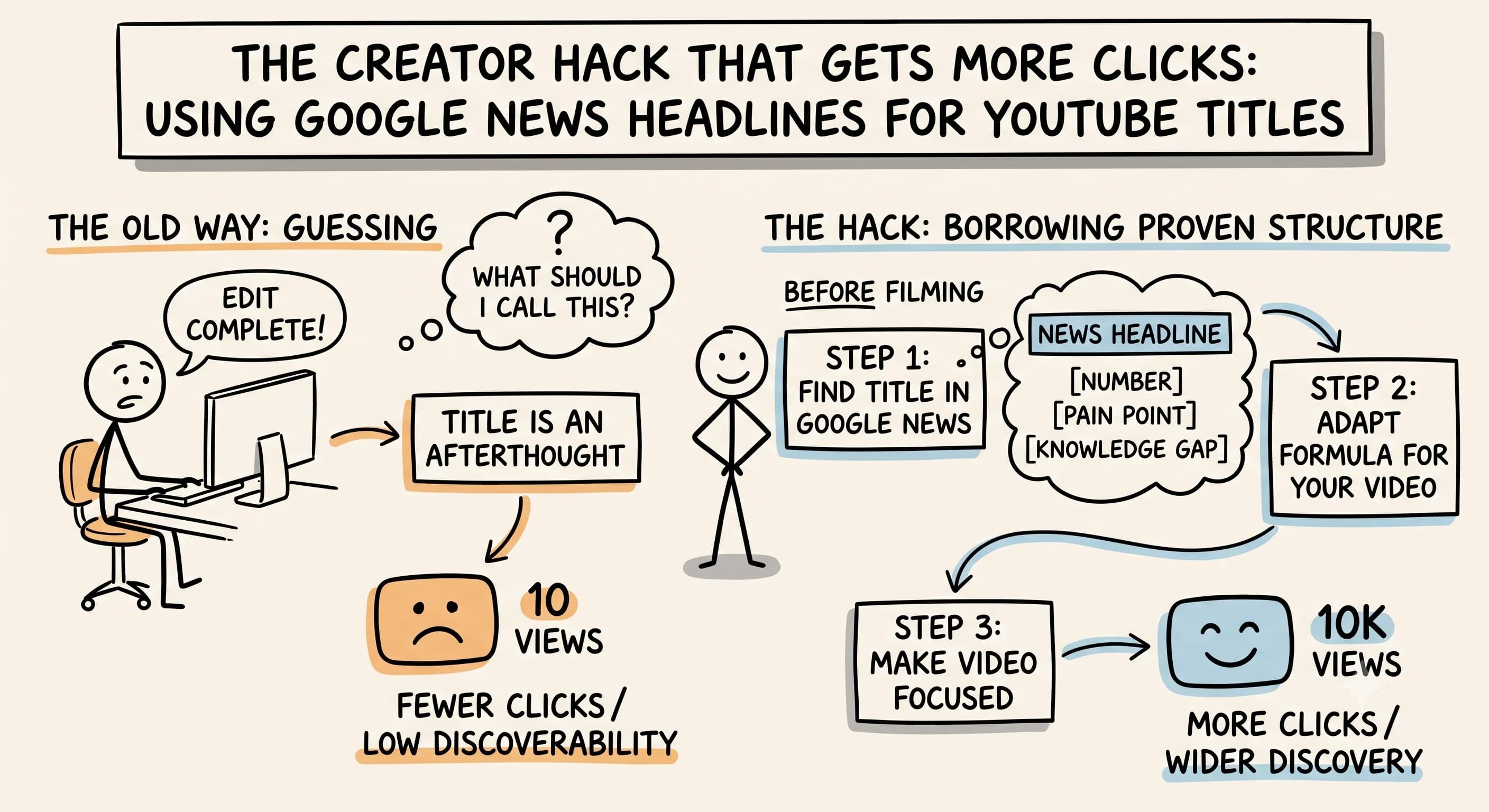
Your YouTube title is either working for you or working against you. There is no neutral ground. It determines whether someone clicks, whether the algorithm surfaces your video, and whether your content even has a chance to be seen. And most creators are getting it wrong — not because they lack talent, but because they are guessing instead of borrowing from people who already know the answer.
Why Your Video Headline Is the Most Important Thing You Will Write
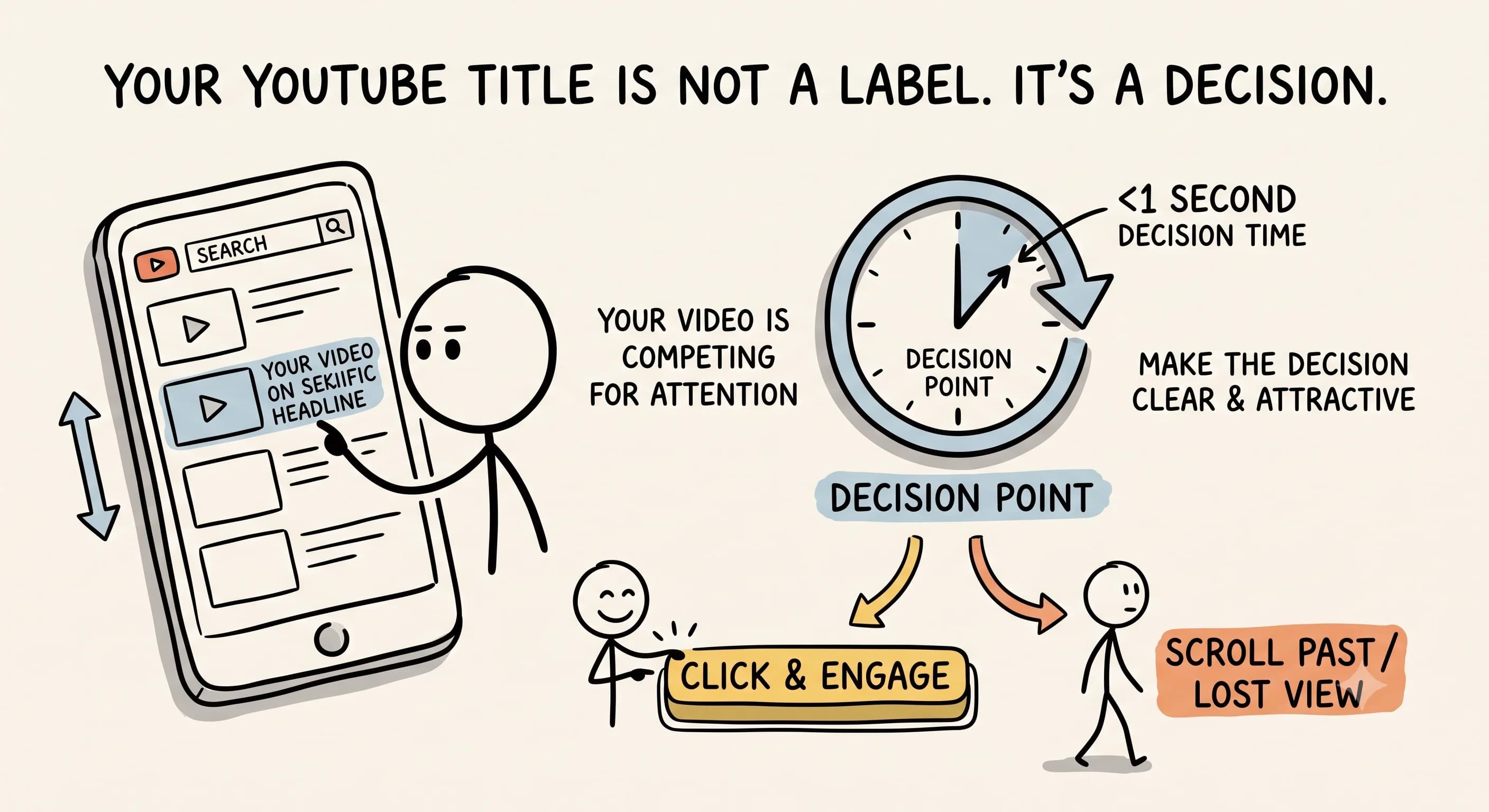 Your title is not a label. It is a decision your viewer makes in less than a second. When someone scrolls through YouTube search results or their feed, the headline is what either stops them or loses them. According to YouTube's own help documentation, your title should accurately reflect the content and work alongside your thumbnail to attract clicks without misleading viewers. That is a tighter brief than most creators give themselves.
Most creators treat the title as the last step. They finish filming, they edit, they upload, and then they dash something off because they need to hit publish. That approach produces forgettable titles because there is no strategy left in the tank by that point.
Flip that process entirely. Decide your title before you film a single frame. When you know exactly what your video promises, you stay on topic, you cut the fluff, and your content is sharper for it. The title shapes the video, not the other way around.
The Google News Trick That Professional Creators Already Use
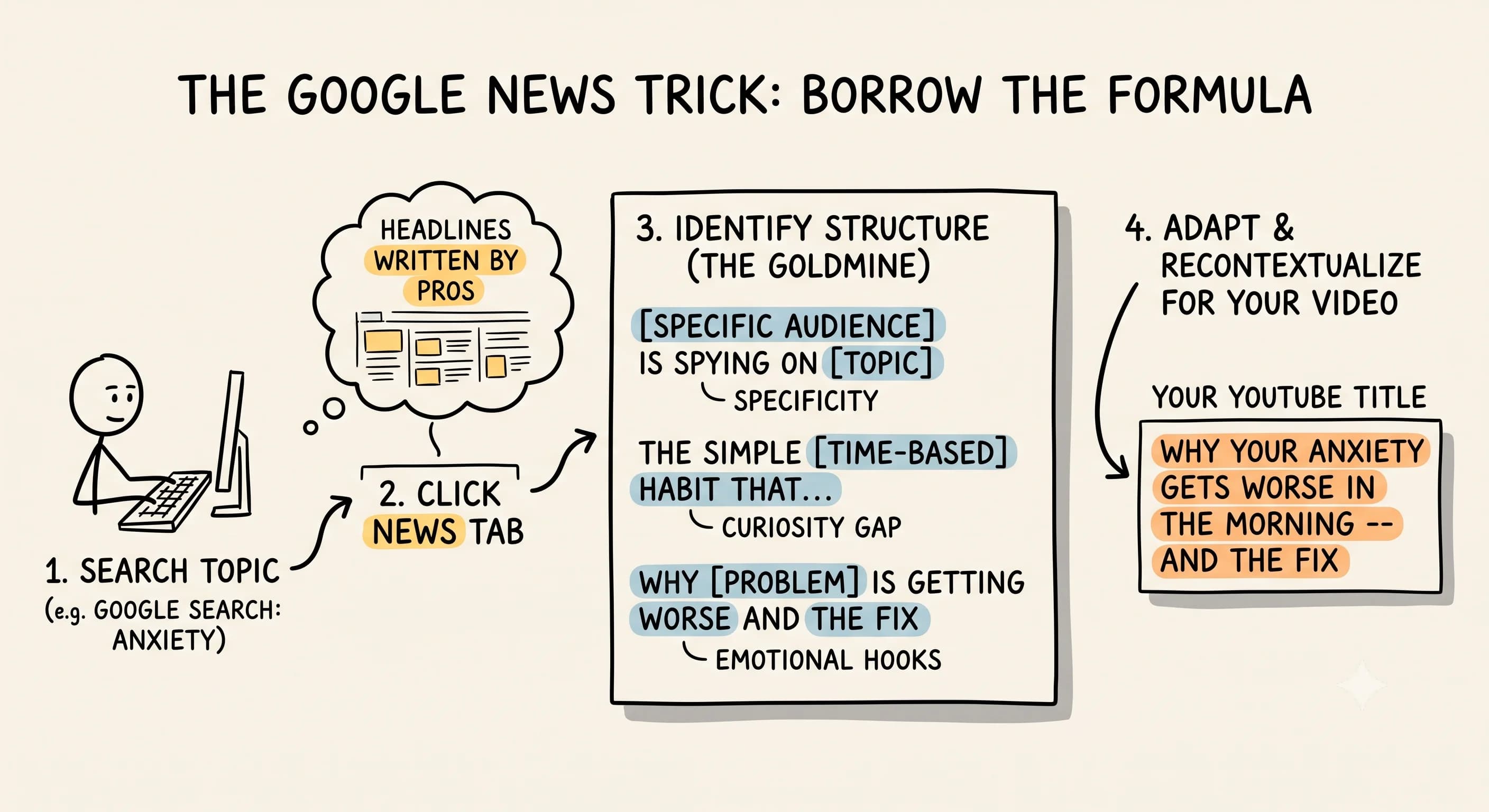 Open Google. Type your topic into the search bar. Click the News tab.
What loads is a page of headlines written by professional journalists and copywriters — people whose entire job is to make you stop scrolling and click. These publishers understand audience psychology, pain points, and curiosity at a level most individual creators have never had to develop. And their output is sitting there, publicly available, every single day.
This is not about copying anyone's work. It is about studying structure. Notice how the headlines are built. See what creates urgency. Notice when they use numbers, when they name a specific audience, when they create a knowledge gap that you desperately want to close. Then take that structure and recontextualize it for your video.
You are not stealing their story. You are borrowing a proven formula and making it yours.
According to Search Engine Journal, Google News values headline presentation and article discoverability through specific and searchable titles. That specificity is exactly what makes those headlines useful raw material for YouTube title analysis. The professionals writing them are already optimizing for the same thing you need: clarity, relevance, and clicks.
What a Real Example Looks Like
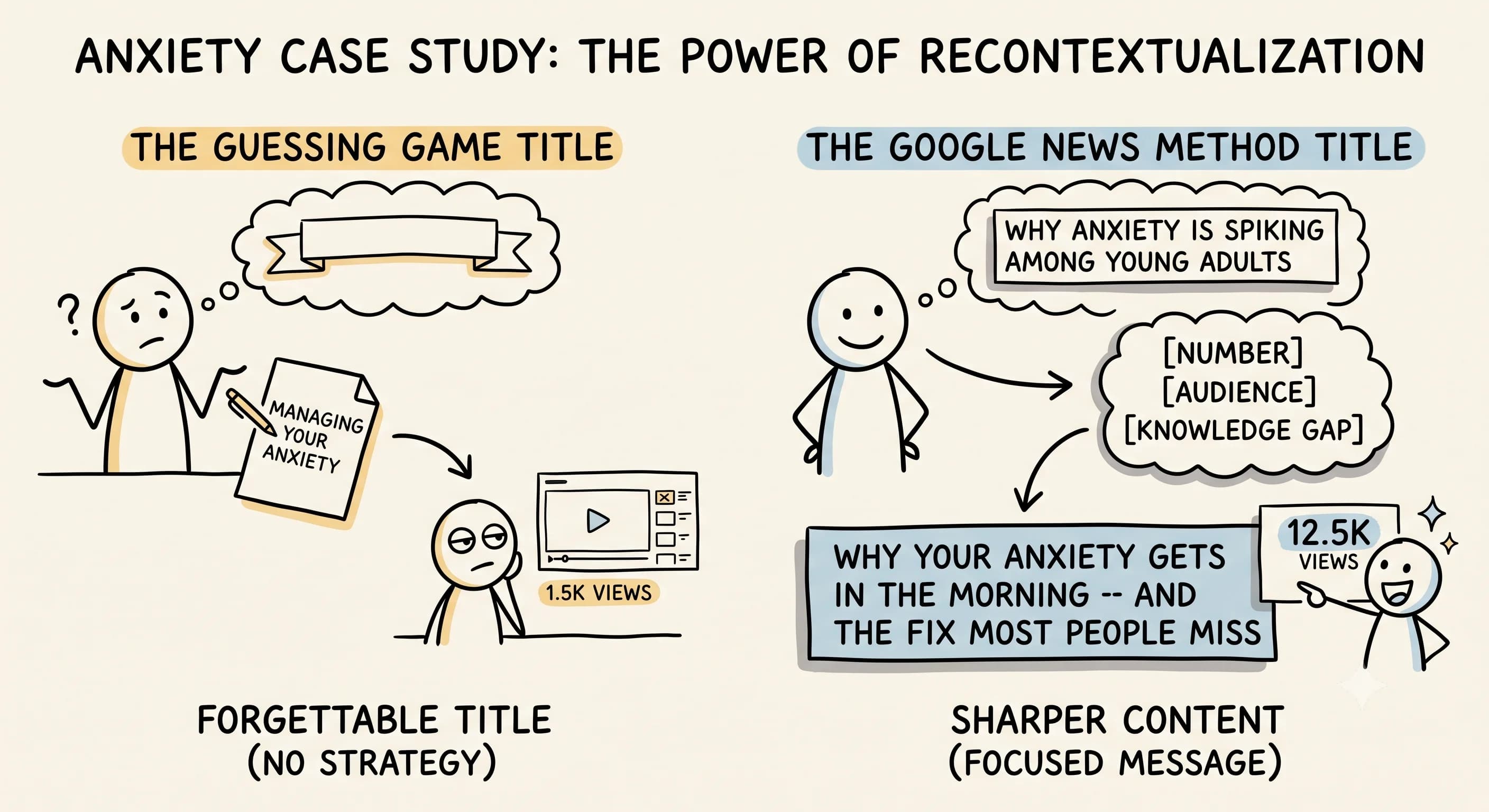 Say you want to make a video about managing anxiety. You head to Google News, search "anxiety," and you find headlines like "Why Anxiety Is Spiking Among Young Adults — And What Experts Say to Do" or "The Simple Morning Habit That Helped One Writer Beat Anxiety for Good."
Notice how those grab your attention immediately? Now recontextualize: "Why Your Anxiety Gets Worse in the Morning — And the Fix Most People Miss." That is a powerful YouTube title built on a proven headline base. Same structure, your story, your audience.
Book titles work this way too. Publishers spend months testing language before a book cover goes to print. Browse bestseller lists and you will find the same curiosity gaps, specificity, and emotional hooks that make news headlines work. Both are goldmines of tested language.
How Google News Headlines Help You Show Up in Search Results
Here is a layer to this strategy that most creators do not think about. Because Google owns YouTube, video content is increasingly prioritized in Google search results. When your YouTube title uses language that mirrors popular article headlines and natural search queries, you increase your chances of appearing not just on YouTube but on the broader Google search page as well.
That is a significant opportunity. Someone searching for a topic on Google may see your video featured directly in their results without ever opening YouTube. By aligning your title with the language that professional publishers use, you make your content more discoverable across the entire search ecosystem.
VidIQ's research into YouTube title best practices points to keyword-first wording and curiosity hooks as the two most important structural elements for click performance. The Google News method delivers both naturally, because the headlines you are studying were written with those exact principles in mind, even if the journalists writing them were not thinking about YouTube SEO.
According to Teleprompter.com, front-loading keywords and keeping titles readable are among the strongest practices for YouTube title optimization. Professional news headlines consistently do both. When you study and adapt them, you are absorbing those habits by osmosis.
Is Google Using AI to Replace News Headlines?
This is worth addressing because it is changing the landscape you are working in. Google is actively testing and rolling out AI-generated headlines in its search results and Discover feed, replacing the carefully crafted language that journalists write. The Verge and multiple publishers have documented Google rewriting their headlines using generative AI, often producing results that are less accurate or contextually weaker than the originals.
For creators using this strategy, that is a heads-up worth paying attention to. The Google News tab still surfaces professional, human-written headlines and remains a reliable source for studying proven structure. But the broader search results page is becoming less consistent as AI rewrites more of what appears there.
Well-crafted, human-readable titles still carry significant weight in determining what gets featured and clicked. That is not going away. The method of studying professional headlines and adapting their structure remains sound.
Your Step-by-Step Process for Using This Method
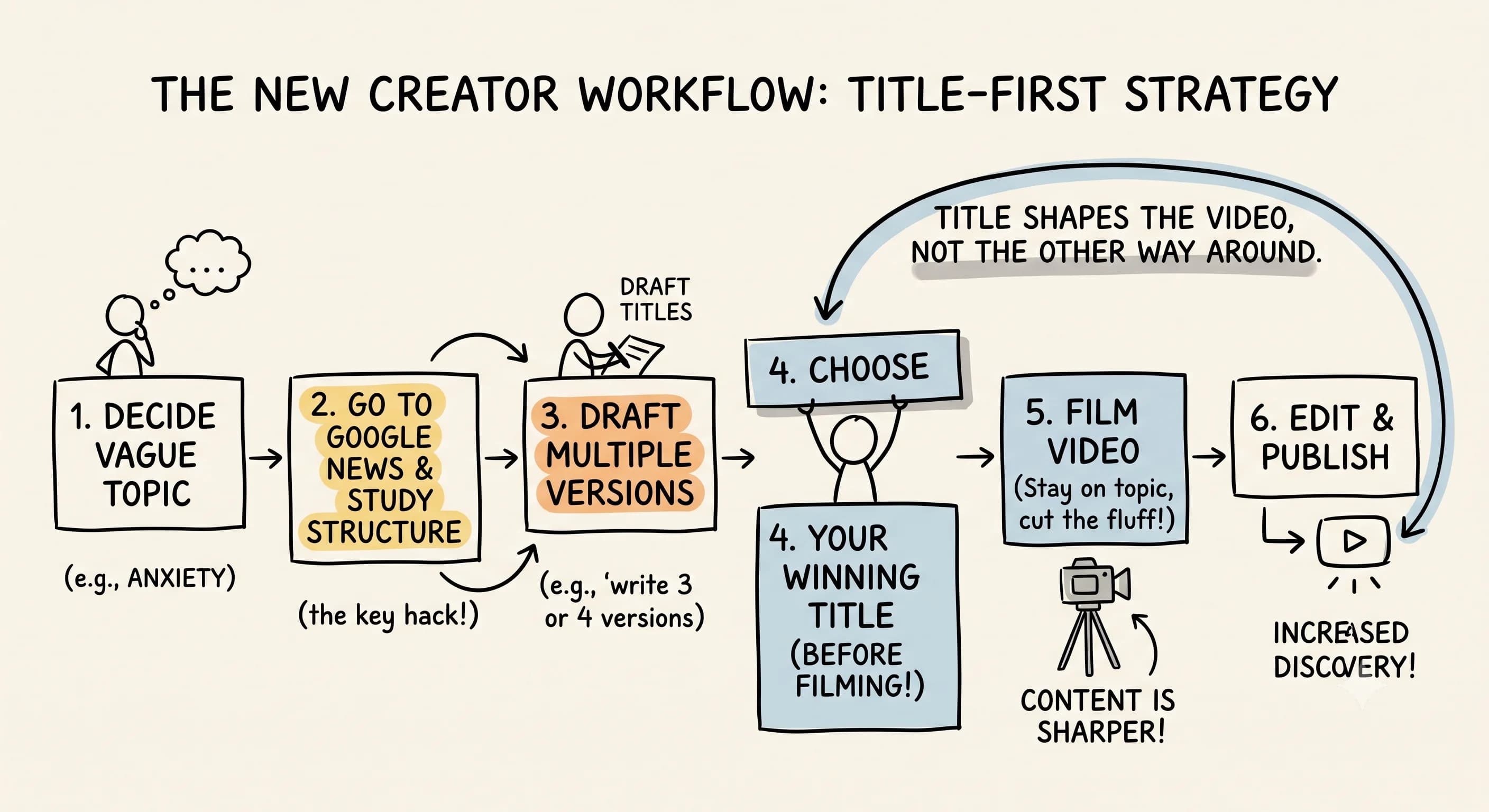 Here is how to build this into your content creation workflow so it actually sticks:
Step one: Decide your topic before you do anything else. Get clear on the subject and the core story you want to tell. Vague topics produce vague titles.
Step two: Go to Google News and search your topic. Browse the headlines that appear from real publishers. Give yourself five to ten minutes here. You are not rushing this part.
Step three: Identify the structure, not just the words. Note how they generate curiosity. See when they use specific numbers. Notice how they address a pain point directly or create a knowledge gap. That structure is what you are borrowing.
Step four: Recontextualize for your video and your audience. Adapt the headline language so it fits your content. Change the specifics, keep the framework.
Step five: Use that title before you start filming. Let it guide your video structure. It keeps you focused and makes your message tighter.
Step six: Draft more than one version. VidIQ's best practice research recommends drafting multiple title variations and comparing them before committing. Write three or four versions using different structures you found in your Google News research, then choose the strongest.
Google's own guidelines for YouTube content note that titles should be concise, accurate, and work alongside the thumbnail to attract the right viewer. Every title you draft using this method should be checked against that standard before you publish.
The Advantage You Have Been Leaving on the Table
Content creation is genuinely competitive. The gap between a title that gets clicked and one that gets ignored can be a single word choice or a structural decision. You do not need to invent those decisions from scratch when professionals are already making them for you, publicly, every day.
According to experts cited by Transformation Junction, borrowing from proven headline formulas rather than inventing titles from scratch is consistently the stronger approach for YouTube title strategy. That is not a shortcut. That is smart research applied to a real creative challenge.
Your next great YouTube title is already sitting in your Google News feed. Stop guessing and start learning from the people who have been studying this their entire careers. Open that News tab, find the structure that fits your story, and make it yours.
Read more about Becoming a Content Creator
📚 Complete Guides
- How to Become a Content Creator: Complete Beginner's Guide
- Content Creator Platform Guide: Choose the Right Platform to Start Your Creator Journey
⚡ Tactics & Strategies
- 50% Retention Rate Optimization for YouTube Algorithm Success
- Age Bracket as Superpower Strategy for Older UGC Creators
- AI Workflow Integration for Content Reduction
- Audience Consistency Strategy to Avoid Algorithm Penalties
- Audience Poll on Instagram to Source Q&A Content in Advance of Recording
📄 Related Articles
- Voice of the Customer: A Creator's Guide to Magnetic Messaging
- Content Creator Burnout: Signs, Prevention, and the Mindset That Fixes It
- Influencer Authenticity: How Honest Product Reviews Drive Real Influence
- TikTok Creator Search Insights: How to Find Content Gaps That Guarantee Views
- The AI Content Creation Workflow: Turn 37 Seconds Into 1,200 Words
- The AI Content Workflow That Cuts Production Time by 70%
- Influencer Campaign Report: How Smart Reporting Systems Build Stronger Brand Relationships
- How to Ask Someone to Be on Your Podcast (And Actually Get a Yes)
Read more about Systems, Workflows & Operations for Content Creators
Read more YouTube Resources for Content Creators
📚 Complete Guides
⚡ Tactics & Strategies
- 50% Retention Rate Optimization for YouTube Algorithm Success
- Candy vs Vegetables Packaging Strategy for Educational Content
- Click-Through Rate Optimization as YouTube's Primary Success Metric
- Creating Viral Content Through Polarizing and Educational Hooks
- Doubling Production Effort Per Video to Exponentially Increase Views
🧮 Calculators

Alex Kirillov
Details
One link. Every channel, rate, and piece of work brands need to evaluate you. Built for how creators actually get hired.
Claim your profile
Live creator, content, and marketing roles from real companies, with the pay, market, and context the raw job page never gives you.
Browse jobs