Why Brands Are Not Responding to My Pitches: The Three-Variable Formula That Gets Replies
Why brands are not responding to my pitches often comes down to three fixable variables. Learn how to diagnose your pitch template, niche, and brand selection to get more replies.
Details
Why Brands Are Not Responding to My Pitches: The Three-Variable Formula Every Creator Needs
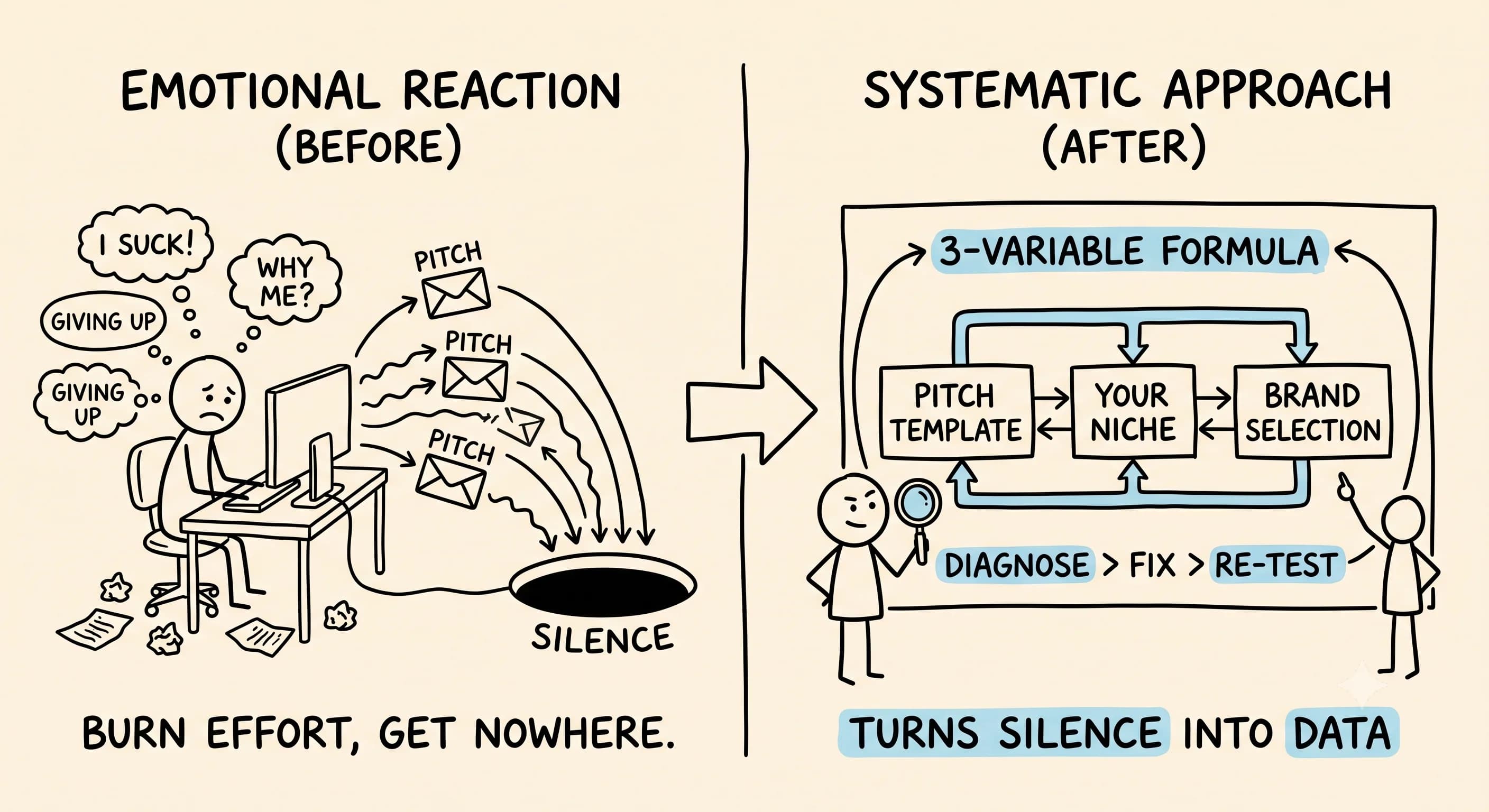
You hit send on another pitch email. Then another. Then ten more. The inbox stays silent. No reply, no rejection, just nothing. If you've ever found yourself spiraling into self-doubt after a string of ignored outreach emails, you're not alone and more importantly, you're probably not doing everything wrong. You might just be testing the wrong variable.
The real reason brands are not responding to your pitches is rarely about a lack of talent or a flawed concept. It's usually a misalignment in one of three critical areas, and until you learn to diagnose which one, you'll keep burning through effort without results. This post breaks down a battle-tested three-variable pitching formula that turns rejection into data and silence into a strategic roadmap.
The Three-Variable Pitch Framework: Template, Niche, and Brand Selection
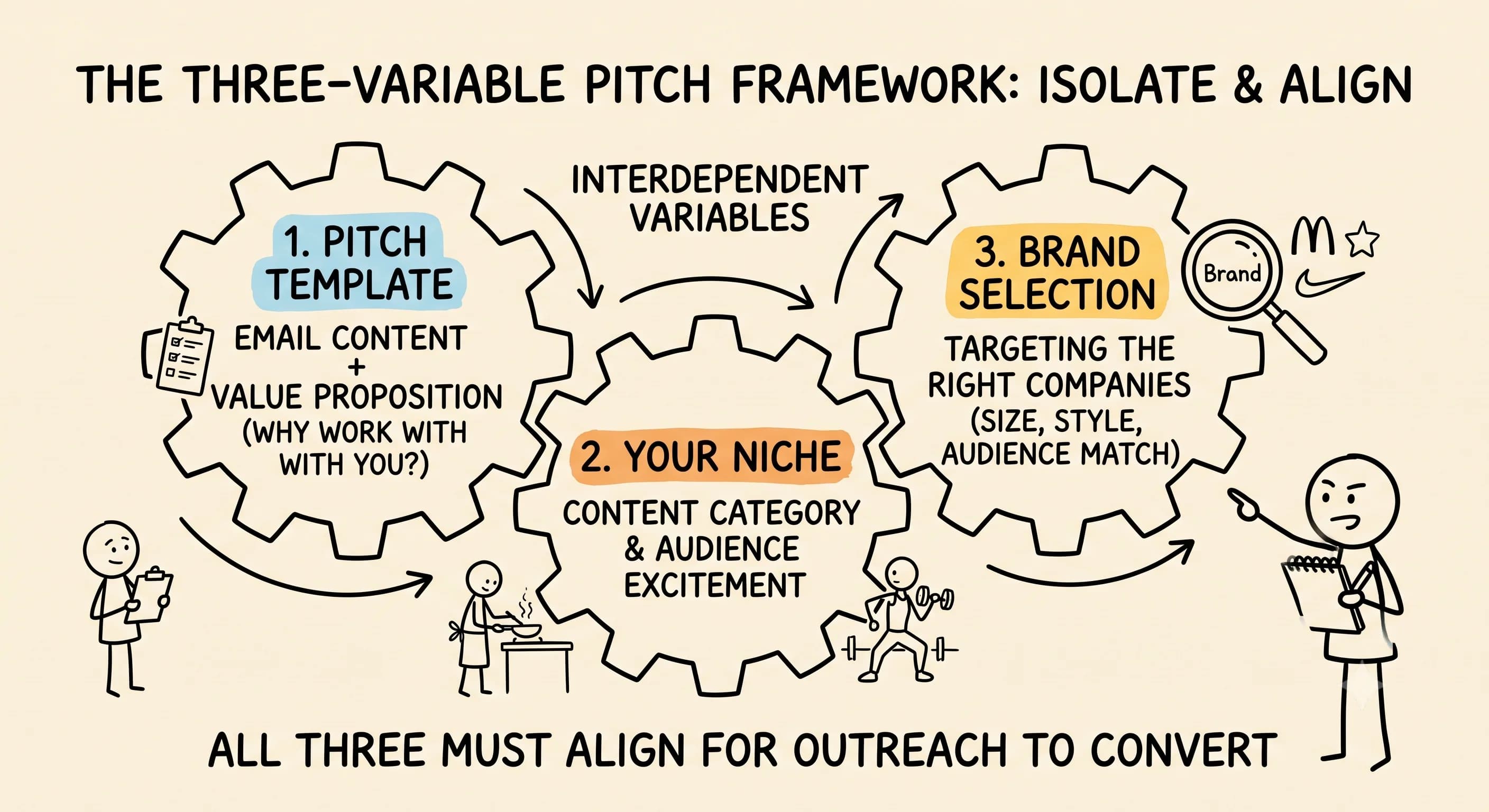 Think of your outreach strategy like a scientist would. There are three interdependent variables working together every time you pitch:
1. Your pitch template the actual email content that explains your value proposition and why a brand should work with you.
2. Your niche the content category you've chosen and whether brands in that space are genuinely excited by what you offer.
3. Your brand selection whether you're pitching the right companies within that niche.
All three must align for your outreach to convert. The problem is that most creators treat a low reply rate as a verdict on their entire worth as a creator, when really it's just feedback on one broken link in the chain. Instead of quitting, the goal is to isolate which variable is off and fix it systematically.
This isn't a theoretical framework either. Creators who've gone from crickets to consistent brand deals consistently describe the same pattern: they stopped treating each ignored email as a personal rejection and started treating it as a data point. That mindset shift alone changes everything.
How to Diagnose a Low Reply Rate Like a PR Strategist
 In the PR and journalist world, outreach professionals track response rates obsessively. A reporter or editor who doesn't respond to your pitch isn't necessarily rejecting you forever. They might not be the right contact, the timing might be off, or your angle simply didn't align with their current focus. The same logic applies when you pitch brands.
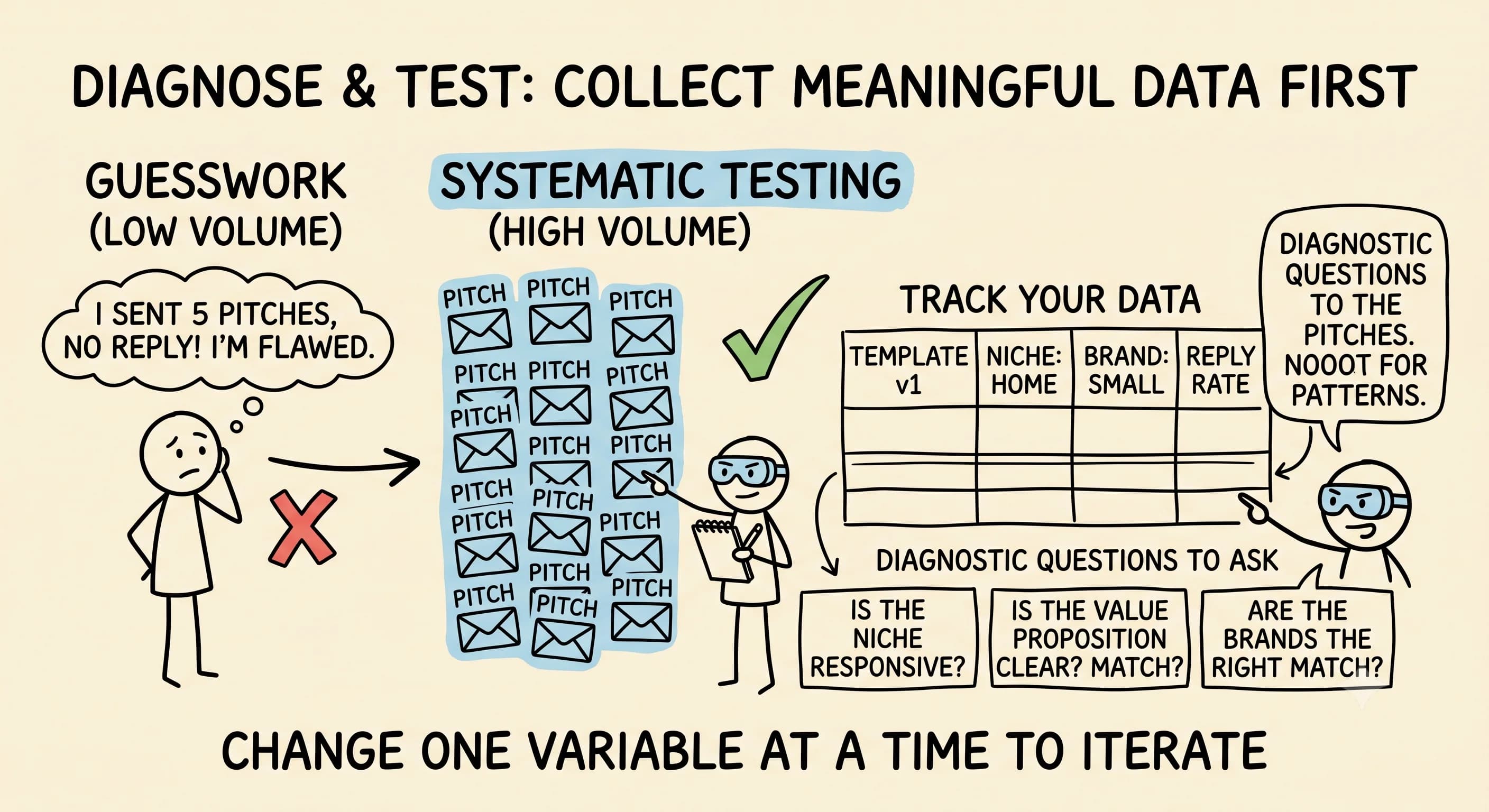
Before you can fix anything, you need statistically meaningful data. Send at least 30 emails per variation before drawing any conclusions. This isn't guesswork. It's the minimum sample size needed to distinguish a real pattern from random noise. If you've only sent five pitch emails and gotten no reply, you don't have a pitching problem. You have a sample size problem.
Once you have enough outreach volume, look at your reply rate and ask:
- Are brands in this niche typically responsive to creator pitches, or do they rely exclusively on PR agencies?
- Does your email clearly communicate a specific value proposition, or is it vague and generic?
- Are the brands you're selecting the right size, style, and audience match for your platform?
These three questions map directly back to your three variables. Work through them in order. Don't jump straight to rewriting your pitch template if you haven't ruled out a brand selection issue first.
Fixing Your Pitch Email: Align Your Template with Real Evidence
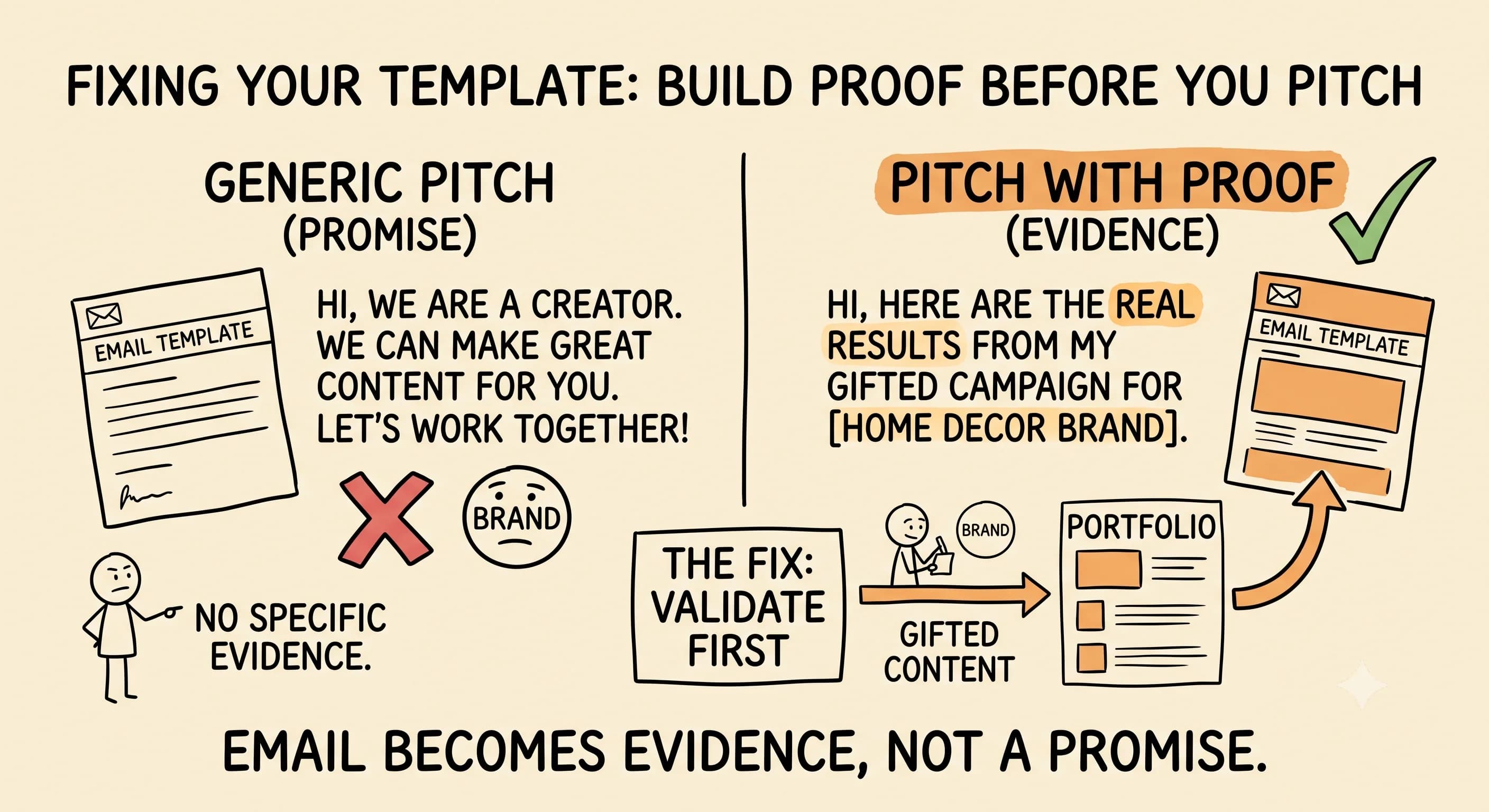 Your pitch template is your first impression, and brand managers are scanning it fast. When someone opens your outreach email, they're looking for one thing: proof that working with you will benefit them. If your email reads like a generic introduction with no specific examples, you'll get ignored. Not because you're not talented, but because you haven't given them a reason to respond.
One of the most powerful moves you can make is to build your portfolio before you pitch. Think about it this way: if you want to book deals with home decor brands but have zero home content in your portfolio, your email template has no ammunition. The fix isn't a better subject line. It's doing gifted campaigns first to generate real examples, then updating your pitch template to reflect your specialization.
This is exactly how creators break into new niches. They don't wait for a paid brand deal to build proof. They create the proof first, then pitch with confidence. When your outreach email can reference brands you've already worked with in that specific category, response rates climb. The email becomes evidence, not a promise.
An entrepreneur mindset means treating your creator business like a startup. You validate before you scale. You test your offer in a low-stakes way, collect proof that it works, and then bring that proof into every future pitch. That's not just smart strategy, it's the difference between an inbox full of silence and one that actually gets replies.
Choosing the Right Niche: What Brands Actually Want to Book
Not every niche is equally attractive to brands when it comes to direct creator outreach. Some categories like home, beauty, fitness, and food have massive brand budgets and active PR teams looking for creator partnerships. Others are harder to monetize through cold email because brands in those spaces either haven't built infrastructure for influencer outreach or they route everything through agencies.
Choose a niche based on content you genuinely enjoy creating, but cross-reference that with whether brands in that space actively respond to creator pitches. If you're pitching a category where most brands work exclusively through PR agencies, a cold email to a generic inbox won't get you far. In that case, you'll need to adjust your approach, targeting PR contacts on LinkedIn, for instance, rather than relying solely on direct outreach.
The niche question is also about specificity. A creator who positions themselves as a general lifestyle creator is much harder for a brand to picture in their campaign than one who focuses specifically on apartment-friendly home organization or budget-conscious outdoor cooking. The more clearly defined your niche, the easier it is for a brand manager to immediately see the fit. Clarity converts.
Brand Selection: Are You Pitching the Right Companies to Get a Reply?
 Even with a strong template and a brand-friendly niche, pitching the wrong companies guarantees silence. A startup with no influencer marketing history, a brand that only works with macro-creators, or a company that just ran a major campaign and has frozen its budget, none of these will respond no matter how good your email is.
Research your targets before you reach out. Look for brands that already work with creators at your level. Check their Instagram for recent sponsored posts from accounts similar in size to yours. Look for PR contact details on their website rather than emailing a generic info@ address. These small steps dramatically increase the chance that your pitch lands in front of someone who has both the authority and the desire to respond.
Brand selection is also about timing. A brand launching a new product line is far more likely to respond to a creator pitch than one that just wrapped a major campaign. Follow brands you want to work with before you pitch them. Engage with their content genuinely. When you eventually send that outreach email, you're not a stranger. That context matters more than most creators realize.
The Follow-Up: Your Most Underused Pitching Tool
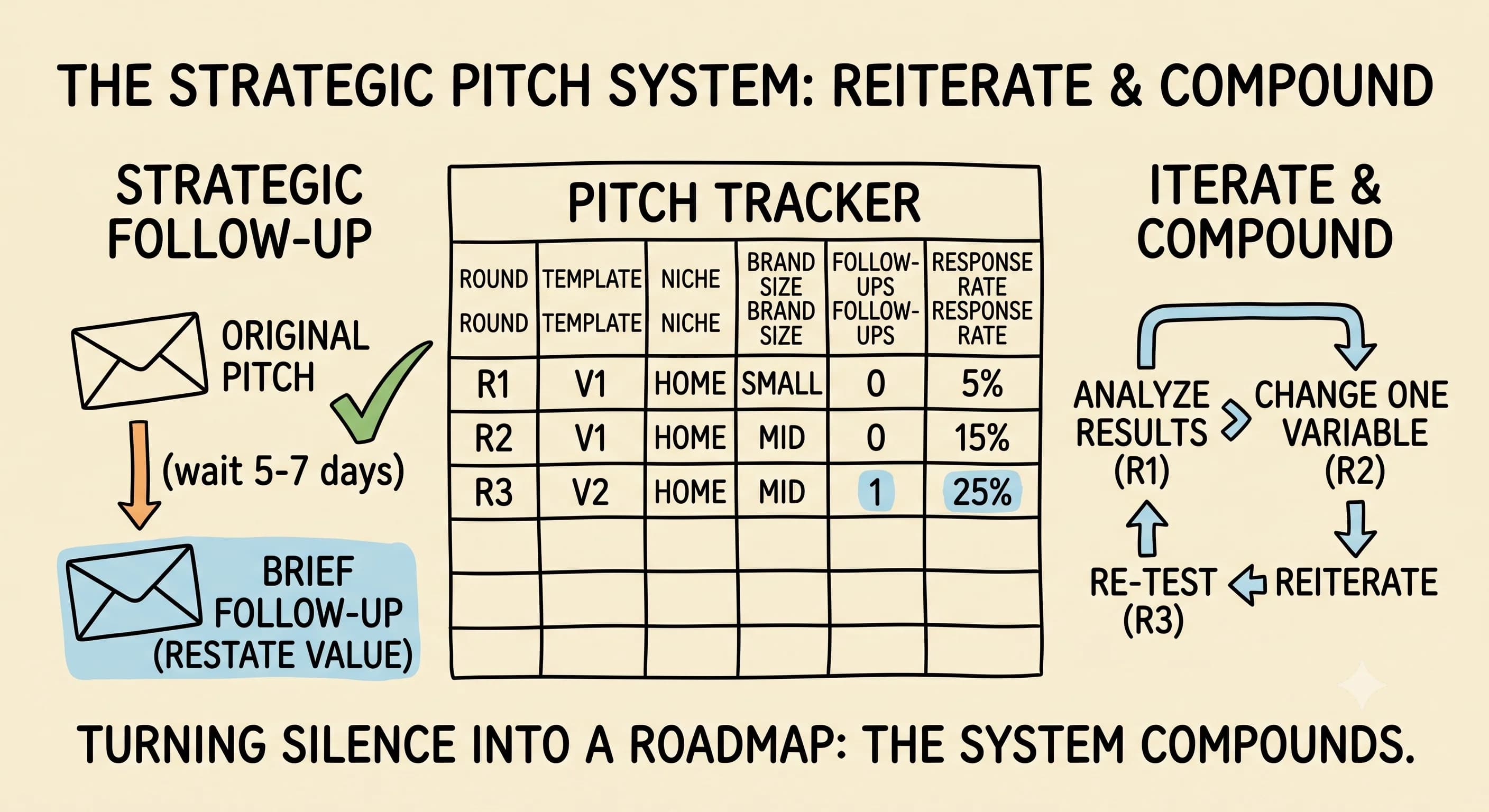
A polite follow-up email often outperforms the original pitch simply because it catches the right person at the right moment. Brand managers and PR contacts are managing a high volume of emails, and even a well-crafted pitch can slip through the cracks during a busy week.
Wait five to seven business days before following up, then send one brief, direct message. Keep it short. Reference your original email, restate your value in one sentence, and make it easy for them to respond with a simple yes or request for more information. Don't resend the entire original pitch. Don't follow up more than twice.
As for timing expectations, response times from brand contacts typically range from two days to three weeks depending on their workflow and campaign cycle. If you haven't heard back after two follow-up attempts, move on and log the data. A non-response after two touches tells you something, either about the brand fit, the timing, or your template, and all of that information is useful.
One thing worth noting: in media and PR contexts, journalists and editors have publicly shared that over-following up can actually get you blocked or deprioritized for future pitches. The same principle applies with brand contacts. Be persistent enough to stay on their radar, but respectful enough to know when to stop.
Turning Rejection and Silence Into a Roadmap
Every unanswered email is information. The creators who consistently book brand deals aren't the ones with the most followers. They're the ones who treat pitching like a system.
Build a simple spreadsheet to track your outreach. Log your template version, the niche you pitched into, the brand tier, the contact type, and whether you got a reply. After 30 or more emails per variation, patterns will emerge. Maybe your template performs well with mid-size brands but not enterprise ones. Maybe your niche resonates with beauty brands but not fashion. Maybe your reply rate spikes when you reach out to PR contacts directly rather than generic brand inboxes.
Change one variable at a time. If you switch your template and your niche simultaneously, you won't know which change drove the improvement. Treat each round of 30 pitches as a controlled experiment. This is how you build a pitching system that compounds over time instead of starting from scratch every few months.
The goal isn't perfection out of the gate. It's iteration. You figure out the pieces that brands actually care about, adjust, test again, and keep going. Silence isn't a stop sign. It's a signal. And once you learn to read it, your entire approach to outreach changes.
Read more about Monetization & Business Models for Content Creators
📚 Complete Guides
- Content Creator Monetization: Proven Revenue Streams
- Content Creator Income Streams: 7 Ways to Build Financial Stability
⚡ Tactics & Strategies
- 30 Daily Outbound Pitches for UGC Deal Generation
- Affiliate Code Negotiation Using Membership Audience Influence
- Age Bracket as Superpower Strategy for Older UGC Creators
- B2B Merchandise Bulk Sales to Industry Professionals- Packaging Products as Client Gifts for Lawyers and Service Providers
- Becoming Your Own Sponsor by Plugging Your Offer Within Episodes
📄 Related Articles
- UGC Usage Rights Explained: What to Charge and How to License
- Usage Rights Pricing: How Content Creators Can Maximize Revenue from Brand Partnerships
- Welcome Email: Examples and a Sequence That Converts
- Email Sender Reputation: How to Protect It
- Why Content Creators Must Demand Monetary Payment for Influencer Partnerships
- Email List Building: Why It's Your Most Valuable Asset
- How Long Should a Newsletter Be? Longer Than You Think
- What Is a Good Engagement Rate? Benchmarks by Platform
🧮 Calculators

Alex Kirillov
Details
One link. Every channel, rate, and piece of work brands need to evaluate you. Built for how creators actually get hired.
Claim your profile
Live creator, content, and marketing roles from real companies, with the pay, market, and context the raw job page never gives you.
Browse jobs