
YouTube Titles That Get Clicks: Stop Describing, Start Converting
Stop writing YouTube titles that describe your video. Learn outcome-based title framing that speaks to what viewers actually want and dramatically improves your click-through rate.
Details
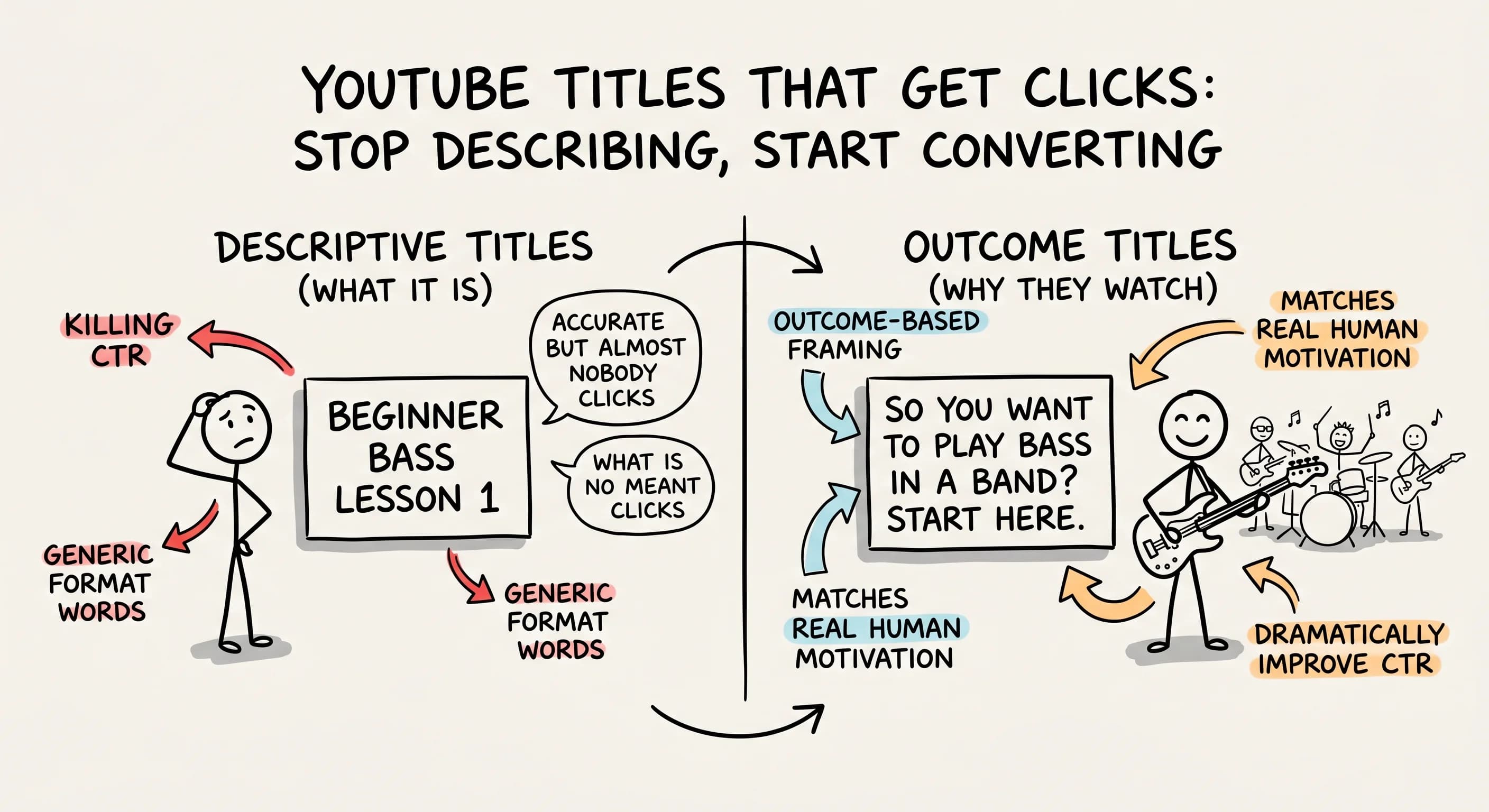
Your YouTube title is a silent salesperson working 24/7. Most creators write titles that describe what's in their video, but the real trick is writing titles that speak to why someone wants to watch in the first place. That shift alone can dramatically improve your click-through rate without changing a single second of your video content. Writing a YouTube title that converts is one of the highest-leverage skills any creator can develop, and it costs nothing to get right.
What Is a Good YouTube Title?
A good YouTube title does three things at once: it tells the YouTube algorithm what your video is about, it gives viewers a reason to click, and it delivers enough curiosity to grab attention without crossing into misleading territory. Many creators ask, how do you make a title for a YouTube video that gets clicks? The answer almost always comes back to one principle: lead with what the viewer wants, not what the video contains.
Ever clicked on a video because the title made you feel something? That emotional pull is not an accident. It is the result of a creator who understood the desired outcome of their audience and put it front and center in the title.
A great title for YouTube videos is specific enough to feel personal but broad enough to speak to everyone chasing the same goal. It is the best title you can write when it matches a real human motivation, not just a search query.
Why Generic YouTube Video Titles Kill Your Click-Through Rate
Imagine you teach bass guitar. You upload a video called "Beginner Bass Lesson 1." It is accurate, it is honest, and almost nobody clicks it. Now imagine the same video titled "So You Want to Play Bass in a Band? Start Here." Same content. Wildly different emotional pull.
Here is why that YouTube title works better: most people learning bass are not learning it to play alone in their bedroom forever. They want to jam with friends, join a band, and feel that rush of making music with other people. When your video title mirrors that desire, viewers instantly think, that is exactly what I want. That emotional recognition is what gets viewers to click and watch your video all the way through.
This is the core principle behind outcome-based framing. Instead of describing the format of your video, you are describing the future state your viewer is actually chasing. Research on desire statements consistently defines them as concise descriptions of a desired future outcome rather than a current process or activity. That is the exact psychological move a great YouTube title makes.
Title is essential not just for clicks but also for watch time. YouTube what your video promises in the title is what viewers expect to receive, so alignment between the two is critical for channel health.
How Long Should a YouTube Title Be?
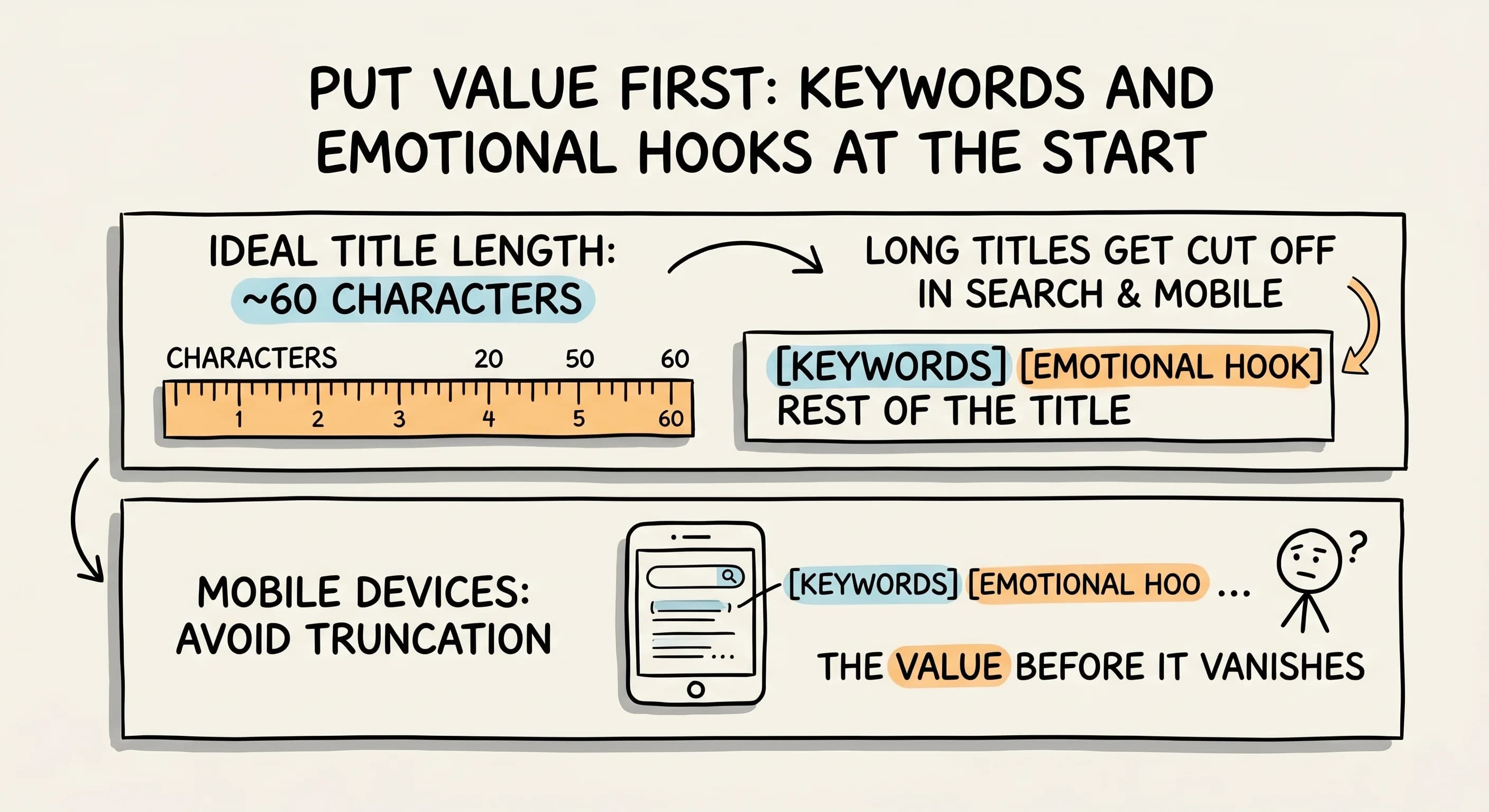
Title length matters more than most creators realise. Titles get cut off in search results and on mobile devices when they run too long. The ideal length for a YouTube title is around 60 characters. A long title risks losing the most important words before a viewer even finishes reading it.
Did you know that most YouTube watch time comes from mobile devices? That means your title needs to land its core promise in the first few words, before any truncation kicks in. Put your keyword and the emotional hook at the beginning of your title so nothing critical disappears on smaller screens.
The rule is simple: keep it under 60 characters when possible, and front-load the value.
Tips for Writing YouTube Titles That Get Clicks
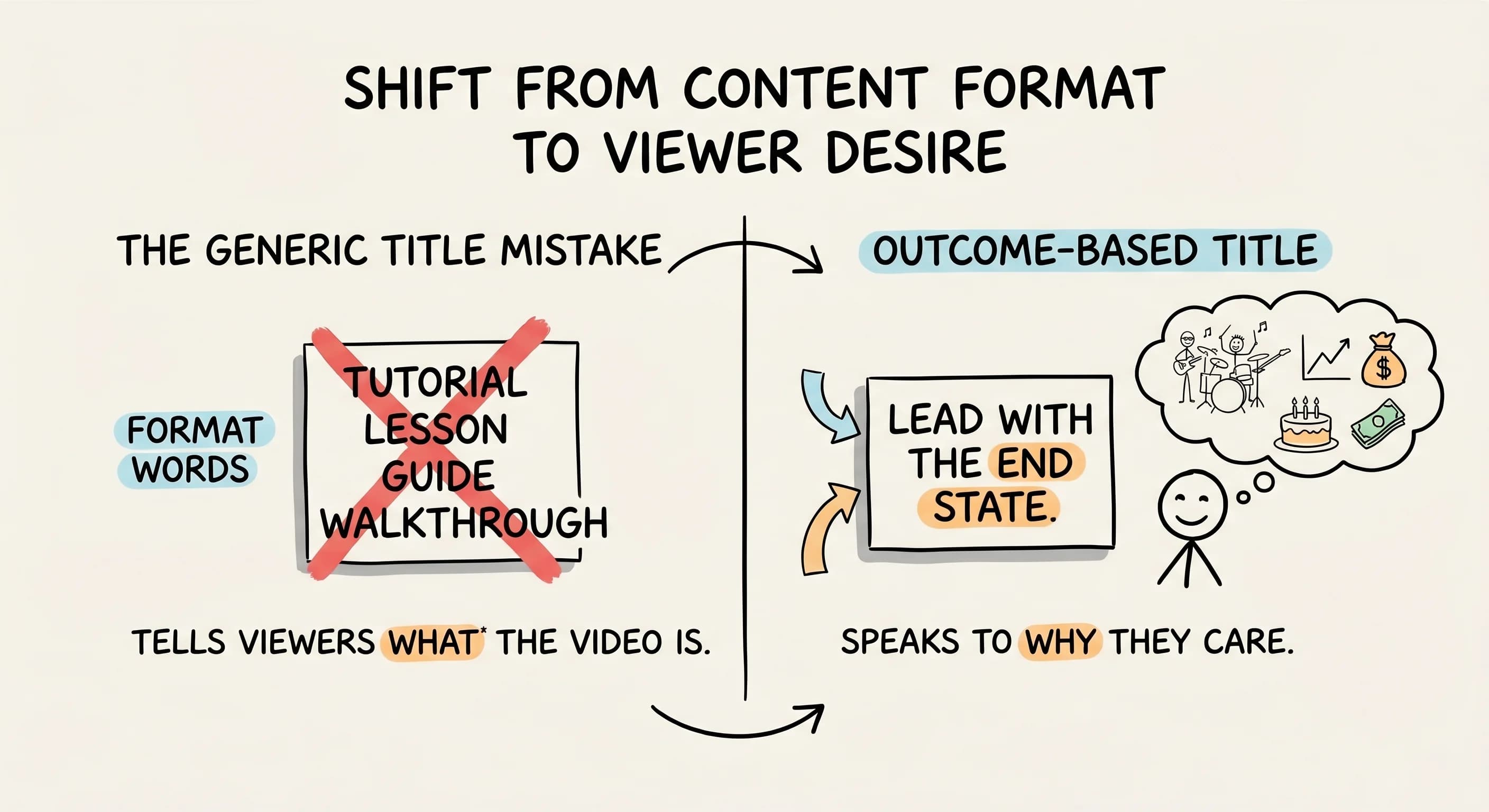
Shift from Format to Outcome
The biggest mistake YouTube creators make is describing content format rather than viewer desire. Tutorial, lesson, guide, and walkthrough are format words. They tell viewers what the video is, not why they should care.
To write the perfect title for your YouTube channel, ask yourself: why does my viewer want to learn this skill? Then write that answer as your title. This is the foundation of outcome-based title writing and one of the most effective ways to write titles that actually convert.
Here are a few variations of the same bass lesson title to show how flexible this approach is:
- Identity-based: "Want to Sound Like You Belong in a Band? Learn Bass Basics"
- Situation-based: "Starting Bass Because You Want to Join a Band? Watch This First"
- Transformation-based: "From Beginner Bass Player to Jam-Ready in One Lesson"
- Outcome and audience: "If You Want to Play Bass With Other Musicians, Start Here"
None of these require a bigger budget, better equipment, or more subscribers. They just require you to think about what your viewer is actually trying to become, not just what your video technically covers.
Use Numbers and Curiosity to Increase Clicks
Numbers in the YouTube title are a proven way to increase clicks because they make promises feel concrete and scannable. Odd numbers in the YouTube title tend to perform especially well. Titles like "7 Reasons Your Bass Playing Sounds Amateur" or "5 Fixes That Get the Video More Views" outperform vague alternatives because the number sets a clear expectation.
Using odd numbers is one simple way to get more clicks without rewriting your entire content strategy. It signals structure, specificity, and value all at once. This is a small but consistent part of any smart YouTube strategy.
Balance Curiosity Without Clickbait
Is it okay to use clickbait titles? Only if your content delivers on the promise. Great YouTube titles create a promise, and your video must keep it. If someone clicks expecting one thing and gets another, they leave immediately. That tanks watch time and signals the YouTube algorithm to stop recommending your content.
A strong title makes a promise your content actually keeps. The goal is not to trick anyone into clicking. It is to match your title so precisely to what your viewer wants that watching feels like a no-brainer.
You have probably experienced this yourself as a viewer. You scroll past ten videos and suddenly one title stops you mid-scroll because it feels like it was written just for you. That is not an accident. That is a creator who understood your desired outcome and wrote a youtube title that gets clicks by speaking directly to you.
How Keywords Work in a YouTube Title That Gets Clicks
How Important Are Keywords in YouTube Titles?
Keywords help the YouTube algorithm understand what your video covers, which determines when and where it gets surfaced. This is basic search engine optimization (SEO) for YouTube: the right keyword improves your discoverability in YouTube search and suggested results, helping people who are actively searching find and watch your video. You should put keywords in your YouTube title, but placement matters. Keywords near the beginning of your title carry more weight, both for search ranking and for viewer comprehension.
So if you are making a video about Messi, what should be the title? Something like "Why Messi Is Still the Best in 2026" works because it front-loads the name, signals relevance, and promises an opinion worth watching. It is a title for your YouTube video that balances search intent with emotional pull.
Should you use hashtags in a YouTube title? Generally no. Hashtags belong in the description, not the title. They consume character space and often make titles feel cluttered rather than compelling.
Does punctuation hurt YouTube titles? Colons and question marks used intentionally are fine. Excessive punctuation, especially strings of exclamation marks, can make titles feel spammy and reduce credibility.
Key Buzzwords and Thumbnail Alignment
Do not repeat key buzzwords from the title word for word in the thumbnail text. Repetition wastes visual real estate. Instead, use the title in the thumbnail space to add a complementary idea or emotional cue that reinforces the promise without duplicating it. Your title and thumbnail work as a team, and the best YouTube creators treat them as a single combined pitch.
If your title asks a question, your thumbnail can show the emotional answer. If your title promises a transformation, your thumbnail can show the before or the after. That alignment is what makes a video feel credible and compelling at the same time.
How to Grow Your YouTube Channel With Better Title Framing
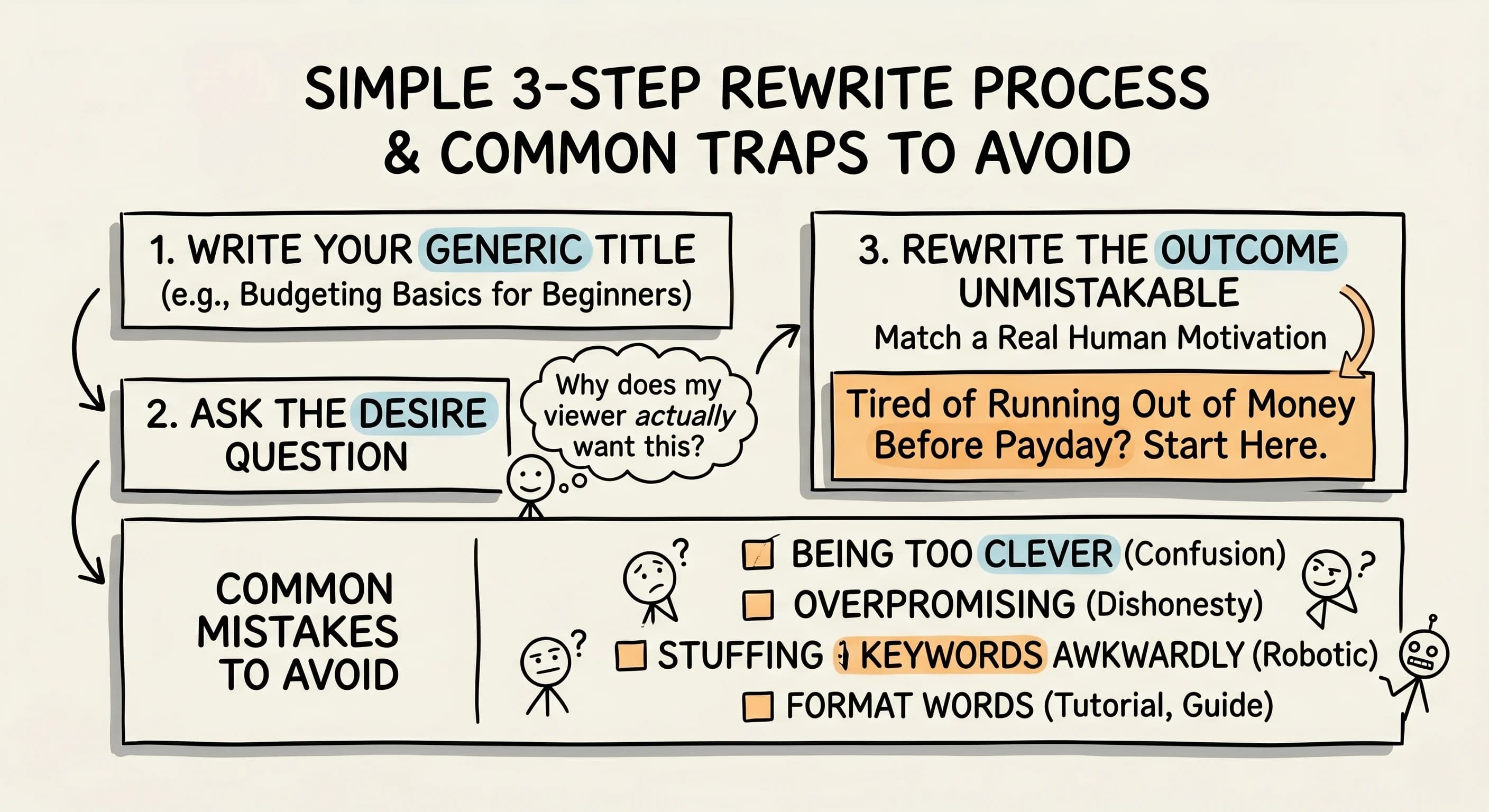
A Simple 3-Step Rewrite Process
This does not have to be complicated. Use this process every time you sit down to write a title for YouTube videos:
- Write your generic title, whatever you would normally call it. If you are stuck, an AI title generator can spit out ten rough options to react to.
- Ask the desire question: why does my viewer actually want this?
- Rewrite around that answer and make the outcome unmistakable.
This works across every niche. Cooking, fitness, finance, coding. Every effective YouTube title can be sharpened by identifying the emotional motivation behind the search. A personal finance creator swaps "Budgeting Basics for Beginners" for "Tired of Running Out of Money Before Payday? Start Here." Same content. Completely different emotional resonance.
The underlying principle is consistent: lead with the end state your viewer is aiming for, not the activity they will be doing to get there.
Should I A/B Test Different Titles?
Yes. Testing different titles is one of the most reliable ways to find out what actually resonates with your specific audience. YouTube does not offer built-in A/B testing for titles, but tools like TubeBuddy offer this feature for eligible channels. Run a test for two to four weeks, then keep whichever version drives better click-through rate and YouTube engagement.
Should you worry if you get a low click-through rate? A CTR below 2% on a video with real impressions is a signal worth investigating. Start with the title. Then check whether the title and thumbnail combination tells a coherent story.
Can an AI YouTube Title Generator Help?
Yes, and it is genuinely useful for first drafts. AI tools like ChatGPT can generate a range of title options quickly when you give them your topic and target audience. There are also dedicated AI YouTube title generators, many of them free AI tools, that take a keyword or a short description of your video and return a batch of click-worthy titles in seconds.
The best way to use an AI title generator is not to copy the first result it gives you. Generate ten options with the AI, identify which ones best reflect the viewer outcome, and then refine those manually. A good prompt matters: tell the AI the emotional outcome your viewer wants, not just the topic, and the AI title ideas come back far sharper. Some creators even feed the AI their video script so the generated titles stay honest to the content.
AI is a starting point, not a final answer. An AI YouTube title generator is fast, but the human judgment about what your specific audience actually wants is still the deciding factor. Use AI to beat the blank page, then apply the outcome-based thinking from this guide to pick the winner.
Can I Change My YouTube Video Title After Publishing?
Yes. You can edit your video title at any time inside YouTube Studio. Changing a title on an underperforming video is often the first and fastest test worth running. A video gets renewed exposure whenever the algorithm re-evaluates it, and a better title can reignite interest in content that previously stalled.
Common Mistakes to Avoid
Beyond format words, watch out for these patterns that quietly reduce CTR:
- Being too clever. A title that makes sense only after watching the video does not help before the click.
- Overpromising. Titles feel dishonest when the content does not match the scale of the claim.
- Ignoring mobile truncation. If your title is too long, everything after the cut-off point vanishes for most viewers.
- Stuffing keywords awkwardly. SEO matters, but if your title sounds robotic, real people will not click on your video.
How Much Does Your Title Affect Views and Watch Time?
How many views does a YouTube video get on average? Most videos get fewer than 1,000 views. The difference between a video that stalls and one that gets tons of views is rarely the content quality alone. It is usually the discoverability, and the title is the first filter every viewer passes through.
How much time do viewers spend watching your video content? YouTube engagement data, including watch time and average view duration, lives inside YouTube Studio. Which videos drive most of your audience watch time each month is worth tracking regularly. If high-CTR videos also show strong watch time, your titles and content are aligned. If CTR is high but watch time is low, your title is overpromising.
Want to craft the perfect YouTube title that viewers cannot resist? Start by measuring what you already have. Benchmark your video marketing performance, including watch time, average view duration, and subscribers gained, against your own historical data first. Then use that baseline to evaluate whether new title approaches are actually moving the needle.
Looking for additional tips to grow your YouTube channel and video views? The single best way to get clicks consistently is to write every title as though you are the viewer discovering it for the first time. Ask yourself what would make you stop and click. That question is the most honest editorial test available, and it costs nothing to use every single time you publish.
Read more about Becoming a Content Creator
📚 Complete Guides
- How to Become a Content Creator: Complete Beginner's Guide
- Content Creator Platform Guide: Choose the Right Platform to Start Your Creator Journey
⚡ Tactics & Strategies
- 50% Retention Rate Optimization for YouTube Algorithm Success
- Age Bracket as Superpower Strategy for Older UGC Creators
- AI Workflow Integration for Content Reduction
- Audience Consistency Strategy to Avoid Algorithm Penalties
- Audience Poll on Instagram to Source Q&A Content in Advance of Recording
📄 Related Articles
- How to Drive Traffic From Social Media: The Octopus Tentacle Strategy
- The P2P Revolution: How Peer to Peer Community Building Is Transforming Influencer Marketing Strategies
- Personal Brand Values: How to Define Them and Filter Every Post
- Content Strategy Framework: The REAL Method
- Viral Content: The Big Idea Formula for Content That Spreads
- Bucket Brigades: The Copywriting Technique That Keeps Readers Reading
- Content Batching: Turn One Video Into Weeks of Content
- Voice of the Customer: A Creator's Guide to Magnetic Messaging
Read more about Systems, Workflows & Operations for Content Creators
Read more YouTube Resources for Content Creators
📚 Complete Guides
⚡ Tactics & Strategies
- 50% Retention Rate Optimization for YouTube Algorithm Success
- Candy vs Vegetables Packaging Strategy for Educational Content
- Click-Through Rate Optimization as YouTube's Primary Success Metric
- Creating Viral Content Through Polarizing and Educational Hooks
- Doubling Production Effort Per Video to Exponentially Increase Views
🧮 Calculators

Alex Kirillov
Details
One link. Every channel, rate, and piece of work brands need to evaluate you. Built for how creators actually get hired.
Claim your profile
Live creator, content, and marketing roles from real companies, with the pay, market, and context the raw job page never gives you.
Browse jobs